
Agricultural Corrosion-Resistant Roofing
PVC Roofing Sheets for Livestock Farms
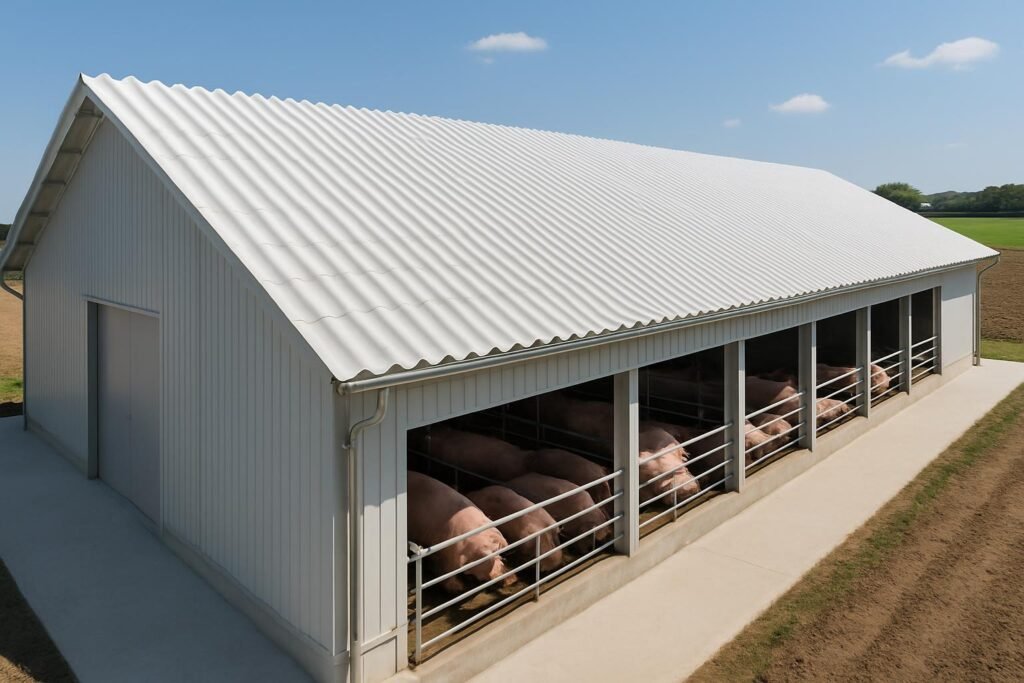
PVC and UPVC roofing solutions for poultry houses, pig farms, cattle buildings, hatcheries, feed-storage buildings and livestock roof-renovation projects exposed to humidity, ammonia, dust, condensate and repeated cleaning.
- Poultry, pig and cattle building review
- Condensation and ventilation coordination
- Opaque and translucent profile matching
- Fastener and accessory compatibility
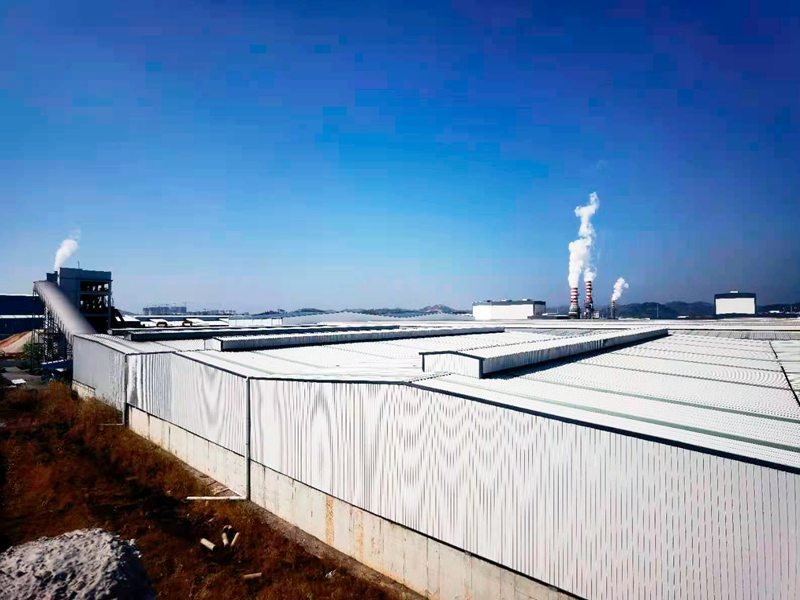
Corrugated PVC or UPVC roofing can be considered for livestock buildings because it does not rust in the same way as unprotected steel. However, one product should not be described as suitable for every poultry, pig or cattle environment without reviewing the actual conditions.
Selection depends on animal type, stocking density, ammonia concentration, humidity, indoor and outdoor temperature, condensate, cleaning chemicals, ventilation, profile geometry, support spacing, local wind or snow loads and the compatibility of fasteners and accessories.
Livestock roof environment
How moisture and farm emissions create roof problems
The most aggressive conditions may occur on the underside of the roof, especially where warm humid air reaches a cooler sheet surface.
Animals and manure
Respiration, drinking systems, washing and manure add moisture and emissions to the building.
Humidity and ammonia
Poor air exchange can allow humid, contaminated air to accumulate near the roof.
Roof condensation
Warm indoor air may condense when it reaches a colder roof surface or metal component.
Component corrosion
Fasteners, washers, flashing, supports and coated metal may deteriorate at different rates.
Leaks and maintenance
Loose fixings, failed seals and corroded details increase repair work and water-entry risk.
Project qualification
Information required before recommending a roofing system
“Poultry house roof” is not a complete specification. Provide the farm, climate, building and operating conditions.
Species and density
Poultry, pigs and cattle create different moisture, dust and ventilation conditions.
Ventilation method
Air inlets, fans, ridge vents and seasonal operating modes affect roof exposure.
Humidity and condensate
Visible dripping or persistent wetness requires a building-level condensation review.
Ammonia and disinfectants
Concentration, contact method and cleaning frequency influence material compatibility.
Temperature and loads
Outdoor heat, cold, wind and snow must be considered with the selected profile.
The full roof assembly
Sheets, fasteners, washers, flashing, insulation and supports must work together.
Livestock applications
Agricultural buildings to evaluate
Each card uses a different image. Product suitability still requires project-specific review rather than a blanket application claim.
Poultry Houses
Review tunnel ventilation, fan penetrations, dust, litter moisture and seasonal condensation.
Pig Farms
Assess high humidity, manure gases, wash-down, disinfectants and corrosion at fasteners.
Cattle Barns
Consider open-side ventilation, large roof spans, moisture, dust and local weather loads.
Hatcheries
Coordinate roof insulation, indoor climate control, hygiene, penetrations and maintenance access.
Feed Storage Buildings
Review dust, ventilation, moisture control, daylighting and protection of stored feed.
Livestock Roof Renovation
Inspect the existing frame, corroded purlins, old profile, drainage and structural condition first.
Roofing options
Products that can form a livestock roofing system
Opaque sheets, daylighting panels and alternative materials should be selected as one coordinated roof rather than unrelated products.
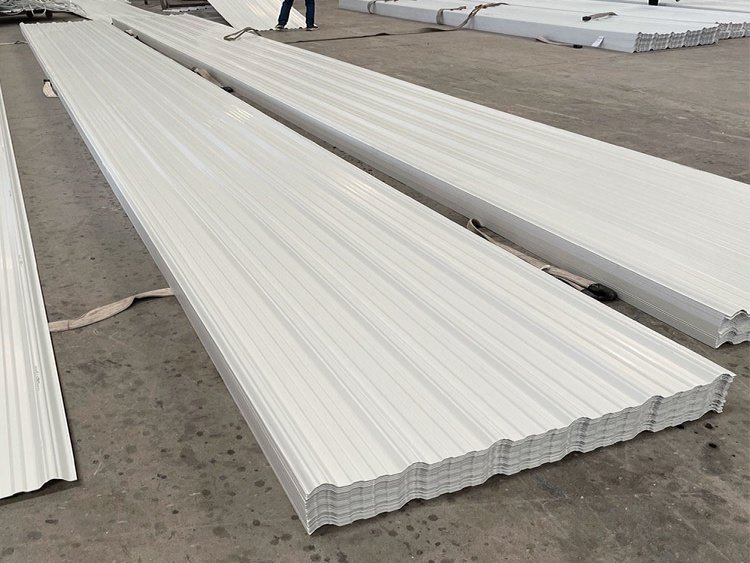
Corrugated UPVC Roof Sheet
Main opaque roofing option where profile, thickness, effective width, support design and farm exposure can be verified.
View Corrugated UPVC Roof Sheets →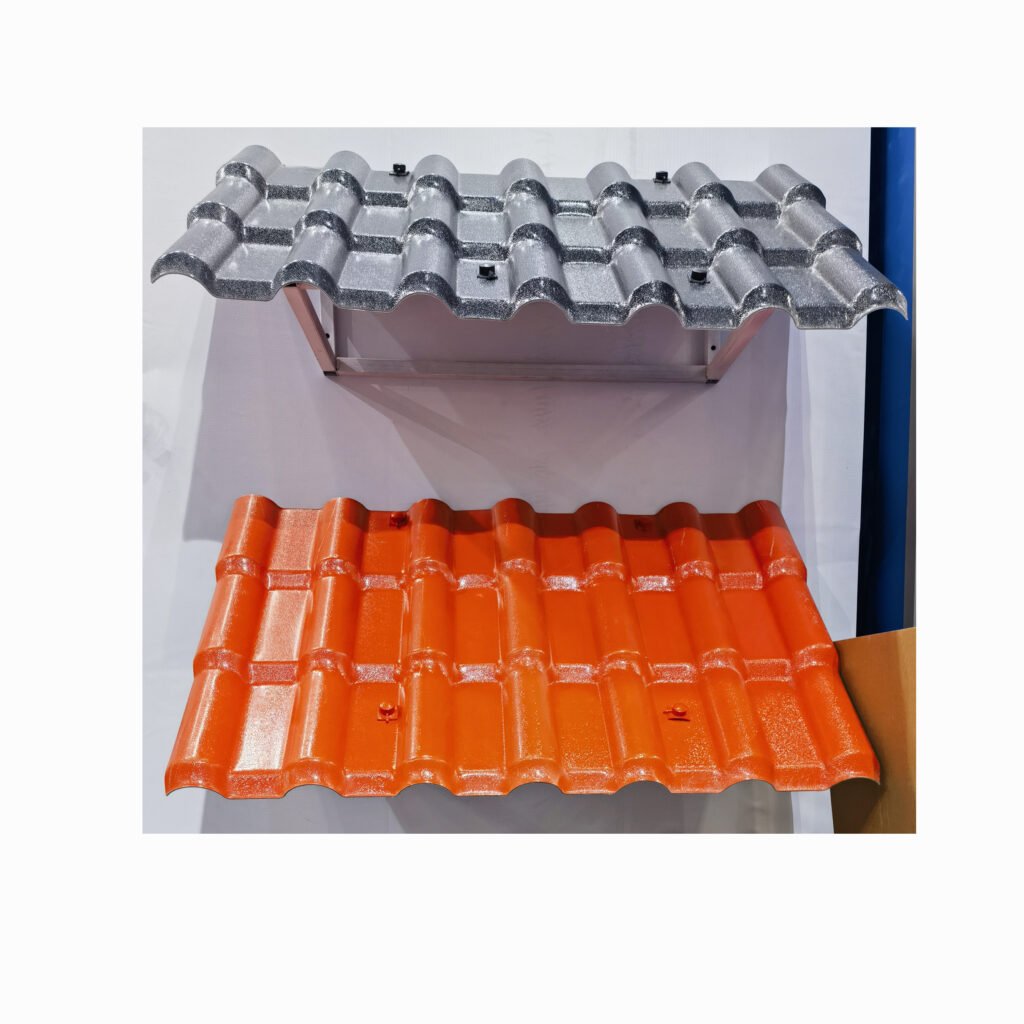
PVC Translucent Roof Sheet
Evaluate profile matching, light transmission, UV grade, cleaning, heat gain and chemical exposure before integrating daylight panels.
Explore PVC Translucent Roofing →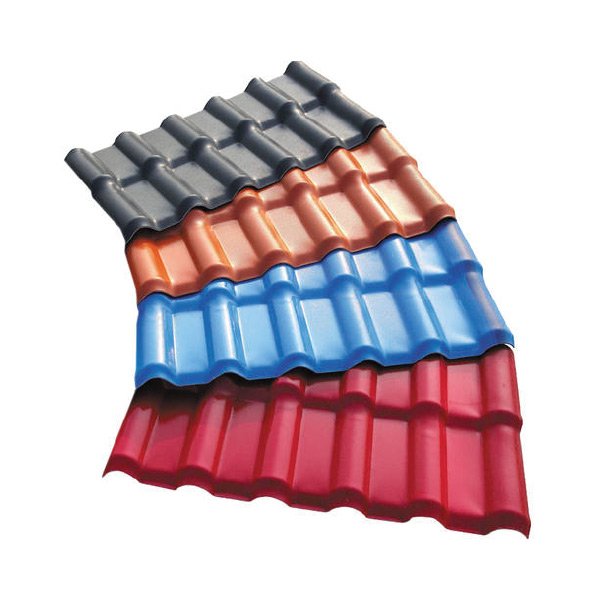
FRP Roofing Sheet
Compare FRP when a project requires a resin-selected corrosion grade, reinforcement or translucent fiberglass roofing.
Compare FRP Roofing Sheets →Reference specifications
Current PVC anti-corrosion sheet data to confirm
Use the website’s current published values as an RFQ starting point, not as a finished livestock-roof design.
| Parameter | Current published reference | Livestock-project confirmation |
|---|---|---|
| Product category | PVC / UPVC anti-corrosion roofing sheet | Confirm formulation and layer structure |
| Thickness | 1.5–3.0 mm | Confirm available grade for profile, span and loads |
| Total width | 840 mm / 1050 mm | Confirm which wave profile each width belongs to |
| Effective width | Not universal | Confirm after side overlap |
| Profile | Corrugated / trapezoidal options | Match existing roof, supports and accessories |
| Length | Custom review | Coordinate roof slope, thermal movement and transport |
| Color | Standard or custom review | Consider heat gain and approve a physical sample |
| Ammonia suitability | Project-specific | Confirm grade, concentration, temperature and exposure |
| Support spacing | Not universal | Use approved profile data and structural design |
| Translucent matching | Profile-specific | Confirm wave pitch, height, width and overlap |
A thicker sheet is not automatically suitable for a wider span. Profile geometry, temperature, support spacing, fastening and local loads also control performance.
Ventilation and condensation
A new roof sheet cannot correct poor air management by itself
The roof, ventilation, insulation and operating system must be designed together to reduce persistent moisture and aggressive condensate.
Complete roof system
Fasteners, seals and accessories matter as much as the sheet
A non-rusting roofing sheet can still leak or fail if the surrounding components are unsuitable for humidity, ammonia, cleaning and thermal movement.
Roofing profile
Confirm profile geometry, effective width, thickness, support layout and overlap.
Fastener system
Select screw material, coating and geometry for the actual farm and outdoor environment.
Washers and seals
Check gasket and sealant compatibility with ammonia, disinfectants, UV and temperature.
Ridge ventilation
Coordinate weather protection, exhaust area, insect control and cleaning access.
Translucent strips
Match the wave and evaluate light distribution, heat gain, cleaning and chemical exposure.
Purlins and supports
Inspect existing corrosion and verify the support system before a renovation roof is installed.
Material comparison
UPVC vs coated metal vs FRP for livestock buildings
The choice should reflect farm exposure, structural design, daylighting, thermal strategy, fire requirements and available technical evidence.
| Selection factor | Corrugated UPVC | Coated Metal | FRP Roofing Sheet |
|---|---|---|---|
| Red rust | Does not develop steel red rust; formulation and complete system still require review | Cut edges, coating damage and fasteners may become corrosion points | Does not rust like steel; resin and reinforcement determine suitability |
| Farm emissions | Confirm grade against ammonia, humidity, temperature and cleaning conditions | Confirm coating, base metal, fasteners and underside condensation protection | Confirm resin grade for the specific livestock or chemical environment |
| Daylighting | Match separate PVC or other translucent panels to the profile | Requires compatible skylight panels | Translucent FRP profiles may be available |
| Thermal strategy | Depends on color, layers, insulation and building design | Metal is thermally conductive; insulation and condensation design are important | Depends on profile, resin, reinforcement and insulation system |
| Structural design | Use approved profile span, load and fastening data | Use the selected metal profile and coating-system data | Use the selected resin and reinforcement profile data |
| Recommended next page | View the UPVC product page | Request a project-specific metal-roof specification | Compare FRP roofing sheets |
Quality control
Inspection points for livestock roofing orders
Define the acceptance criteria before production rather than relying on general terms such as “ammonia resistant” or “long service life.”
Material identification
Record the product grade, formulation or layer structure linked to the quotation.
Thickness inspection
Measure finished thickness at agreed locations and compare it with the approved tolerance.
Profile dimensions
Verify total width, effective width, wave pitch, height, length and overlap fit.
Surface and color
Inspect bubbles, cracks, deformation, scratches, damaged edges and color consistency.
Impact evidence
Define test method, sample condition, temperature and acceptance result when required.
Chemical compatibility
Request evidence linked to the exact grade, exposure and cleaning conditions.
Translucent matching
Trial-fit daylight panels with the opaque profile, laps, fasteners and accessories.
Accessory inspection
Check screws, washers, ridge pieces, flashing and seals against the approved list.
Packing inspection
Verify sheet count, bundle protection, labels, accessory quantity and loading sequence.
Project evidence
Use a verified livestock roofing case format
Do not invent project results. Replace the fields below only after the factory receives photographs, specifications and customer permission.
RFQ checklist
Send the farm, roof and environment information together
A complete RFQ allows profile, thickness, accessories and packing to be reviewed more accurately.
- Project country and climate
- Animal type and quantity
- Stocking density
- Building dimensions
- Roof plan and section drawing
- Existing or required profile
- Roof slope and support spacing
- Ventilation layout
- Humidity and condensation conditions
- Available ammonia data
- Cleaning and disinfectant chemicals
- Thickness and color preference
- Translucent roofing requirement
- Fasteners and accessories
- Order quantity
- Destination port
Related roofing pages
Continue comparing products and applications
These internal links connect the livestock application page with the core product, parent category and related industrial application.
Frequently asked questions
Livestock farm roofing questions
They may be suitable when the exact grade, profile, fastening system, ventilation and farm environment are reviewed. Do not select a product from the application name alone.
Compatibility depends on the product formulation, ammonia concentration, humidity, temperature, condensate, exposure duration and cleaning chemicals. Request evidence for the exact grade.
Thickness should be selected with the profile, support spacing, building dimensions, temperature and local loads. The website’s current reference range is 1.5–3.0 mm, subject to model confirmation.
Coordinate ventilation, insulation, indoor humidity, roof temperature, air leakage, drainage and cold-bridge details. Replacing the roof sheet alone may not eliminate condensation.
Yes, after confirming the wave pitch, height, width, overlap, fasteners, chemical suitability, light distribution and heat-gain requirements.
The screw, coating, washer and seal must be selected for the livestock environment, outdoor climate and cleaning chemicals. Stainless steel is not automatically suitable for every exposure.
They can be evaluated for renovation, but the existing purlins and supporting frame must first be inspected for corrosion, deformation and structural safety.
Use the approved minimum pitch for the selected profile, local rainfall, sheet length, end overlap and drainage design. There is no one universal value for every PVC profile.
Effective width is the useful roof coverage after the side overlap. It must be confirmed from the selected profile drawing rather than assumed from the total sheet width.
Calculate using effective width, roof-slope length, side and end overlap, eaves, ridges, penetrations, cut areas and an agreed project allowance.
Custom lengths can be reviewed according to the profile, production capability, roof slope, thermal movement, handling and container-loading limits.
Provide the farm type, animal quantity, building and roof dimensions, profile, ventilation, humidity, ammonia conditions, cleaning chemicals, thickness, color, translucent sections, accessories, quantity and destination.
Request a livestock farm roofing recommendation
Send the farm type, roof drawing, ventilation layout, humidity and ammonia conditions, required profile, thickness, color, daylighting sections, accessories and destination port.