
Fiberglass roofing sheet manufacturer
FRP Corrugated Sheets for Roofing & Daylighting
Custom-profile fiberglass reinforced plastic sheets for industrial roofs, wall cladding, daylight strips and corrosive building environments.
- Profile matching from drawing or sample
- Opaque and translucent options
- Custom length, colour and packing
Product Overview
What Is an FRP Corrugated Sheet?
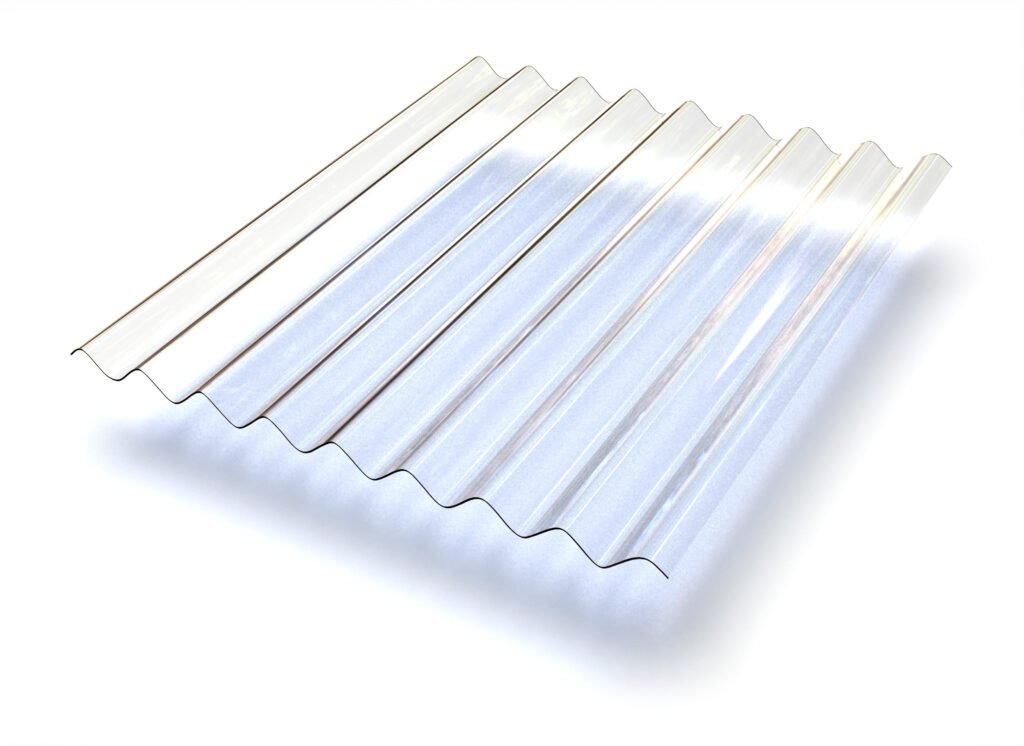
An FRP corrugated sheet is a profiled panel made from fibre-reinforced resin. Depending on the formulation and reinforcement, it may be used as a translucent daylight panel, opaque roofing sheet or wall-cladding panel.
Correct selection requires more than a product name. The profile must match adjoining roof sheets, while resin system, reinforcement, surface protection, colour and nominal thickness must suit the project environment.
- Corrugated profiles
- Trapezoidal profiles
- Translucent daylight panels
- Opaque or coloured sheets
- UV/weathering surface options
- Custom production lengths
Product Options
Choose the Sheet by Function
The profile and laminate specification should be matched to the roof system, light requirement and exposure conditions.
Translucent Rooflights
Daylighting panels designed to align with compatible opaque roofing profiles.
FactoriesWarehousesOpaque Roofing Sheets
Coloured FRP panels for selected industrial, agricultural and commercial roofs.
RoofingCladdingCorrosion-Resistant Panels
Resin and surface systems reviewed for humidity, fumes and chemical exposure.
ChemicalCoastalCustom Profiles
Profile reproduction evaluated from a drawing, precise dimensions or physical sample.
OEMProjectsSpecification Guide
FRP Corrugated Sheet Specifications
The final order should identify the complete laminate and profile—not only thickness and colour.
| Item | Options to discuss | Buyer confirmation |
|---|---|---|
| Profile | Corrugated, trapezoidal or project-specific geometry | Drawing/sample, pitch, wave height and overlap |
| Overall & effective width | Defined by selected profile and side lap | Total width and net cover width |
| Length | Standard or custom production length | Cut length, tolerances and quantity schedule |
| Nominal thickness | Project-specific sheet thickness or weight specification | Measurement method and tolerance |
| Resin system | General-purpose or exposure-specific formulations | Temperature, humidity, fumes and chemical contact |
| Reinforcement | Fiberglass reinforcement selected by laminate design | Required mechanical or project performance |
| Colour & light | Clear/translucent, tint, opaque or referenced colour | Transmission target and approved sample |
| Surface protection | Film, gel coat or weathering surface option by product | Outdoor exposure and service-life expectations |
| Fire performance | Grade-specific options where available | Exact standard, rating and report required |
| Packing | Nested bundles, edge protection and container planning | Handling, labels and destination port |
Engineering note: Sheet thickness alone does not establish allowable span, wind load, snow load or walkability. Support spacing, fasteners, overlaps, thermal movement and local building requirements must be verified by the responsible project designer.
Profile Matching
Match the Existing Roofing Geometry
For replacement rooflights or combined roofing systems, a small dimensional mismatch can create poor laps, leaks or installation delays.
Wave Pitch
Measure centre-to-centre spacing between repeated corrugations across the sheet.
Wave Height
Confirm the vertical distance from valley to crest using the approved section drawing.
Cover Width
Separate overall width from effective coverage after the specified side overlap.
Crest & Valley Shape
Identify rounded, angular or asymmetric geometry and any profile direction.
Side & End Lap
Confirm required overlaps, sheet direction, roof slope and weather-sealing detail.
Physical Sample
When drawings are unavailable, provide an undamaged full-profile sample for review.
Applications
Where FRP Corrugated Panels Are Used
Industrial Rooflights
Translucent strips coordinated with surrounding metal or plastic roofing profiles.

Factories & Warehouses
Roofing and wall panels selected around daylighting, exposure and structural design.

Agricultural Buildings
Panels for barns and farm structures after humidity, ammonia and ventilation review.
Chemical Plants
Resin systems evaluated against identified fumes, splash, temperature and maintenance conditions.
Coastal Buildings
Roofing and cladding projects exposed to salt-laden air, humidity, wind and rainfall.
Canopies & Shelters
Translucent or coloured corrugated panels for defined outdoor covering systems.
Material Comparison
FRP vs Polycarbonate Corrugated Sheets
| Selection factor | FRP corrugated sheet | Polycarbonate corrugated sheet |
|---|---|---|
| Construction | Fibre-reinforced resin laminate | Profiled thermoplastic polycarbonate sheet |
| Primary selection focus | Resin, reinforcement, corrosion exposure and profile | Grade, impact, UV layer, temperature and profile |
| Light options | Translucent, tinted or opaque depending on laminate | Clear, tinted or opaque depending on grade |
| Forming | Profile formed during manufacturing | Extruded or formed profile depending on product |
| Critical buying check | Laminate construction and weathering surface | UV protection and thermal movement |
| Profile matching | Drawing or sample required | Drawing or sample required |
Order Workflow
From Profile Review to Container Loading
Requirement Review
Confirm building use, exposure, profile, size, light, colour and quantity.
Sample & Specification
Approve profile geometry, laminate requirement, appearance and tolerances.
Production & Inspection
Manufacture to confirmed order data and check agreed profile and dimensions.
Bundling & Shipment
Nest, protect, label and prepare sheets for handling and container loading.
RFQ Checklist
Request an FRP corrugated sheet quotation
Send the roof profile and exposure details so the factory can evaluate the correct product construction.
Please include
- Application/building
- Profile drawing or sample
- Pitch and wave height
- Overall/effective width
- Length and quantity
- Thickness/weight basis
- Colour/light target
- Exposure conditions
- Fire requirement
- Required documents
- Packing needs
- Destination port
Related Products
Continue Through the Roofing Range
FRP Sheets
Explore the broader fibreglass sheet range for roofing and cladding.
View FRP sheets →Polycarbonate Sheets
Compare solid, hollow, corrugated and textured polycarbonate options.
View polycarbonate sheets →PVC Translucent Roofing
Review alternative translucent profiles for selected daylighting projects.
View translucent roofing →Frequently Asked Questions