
Corrosion-Resistant Industrial Roofing
UPVC Roofing Sheets for Chemical Plants
Corrugated UPVC roof sheets for chemical-processing buildings, workshops, warehouses and industrial areas where moisture, fumes, deposits or condensate can accelerate corrosion of conventional metal roofing.
- Chemical exposure reviewed by project
- Corrugated and trapezoidal profiles
- Custom length and color review
- Fastener and accessory coordination
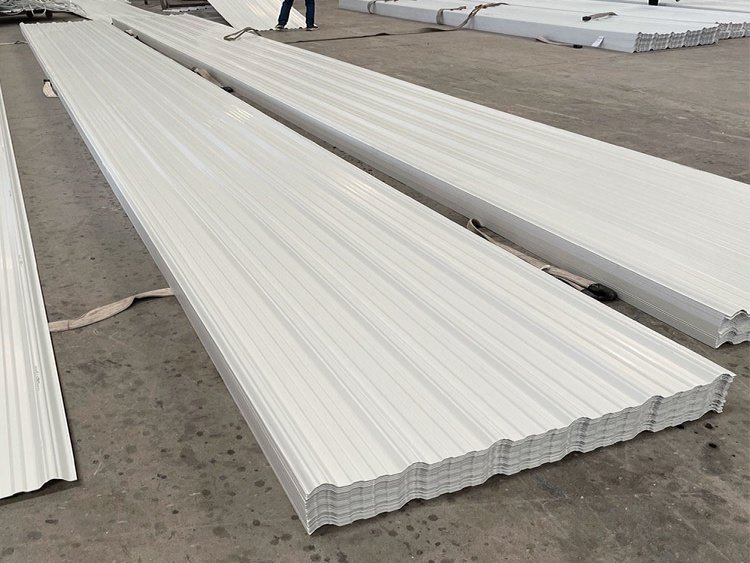
UPVC corrugated roofing can be considered for chemical plants when the ordered material, roof profile and complete fixing system are compatible with the actual exposure. Unlike unprotected steel, UPVC does not rust; however, that does not mean one UPVC grade is automatically resistant to every acid, alkali, solvent, gas or mixed chemical environment.
Product selection should be based on the chemical identity, concentration, temperature, exposure form, duration, condensate, cleaning method, outdoor weathering, structural loads and the compatibility of fasteners, washers, sealants and accessories.
Corrosion mechanism
Why chemical-plant roofs require a different selection process
Roofing exposure is often more complex than direct liquid contact because fumes, humidity and temperature changes can create aggressive deposits and condensate.
Process emissions
Acidic, alkaline, saline or solvent-containing vapors may leave the process area.
Roof deposition
Fumes, dust and aerosols can settle on the underside or exterior roof surface.
Moisture and condensate
Humidity and temperature cycles can dissolve deposits and concentrate chemicals locally.
System-level attack
Sheets, fasteners, washers, sealants, flashing and support members may fail differently.
Exposure qualification
Information required before confirming chemical resistance
A general description such as “acid factory” is not enough. The quotation should record the actual substances and operating conditions.
Identity matters
Acids, alkalis, salts, oxidizers, fuels and solvents can affect PVC formulations differently.
Dilute is not the same as concentrated
The same chemical may have a different compatibility result at another concentration.
Heat can change the result
Chemical compatibility and mechanical properties should be evaluated at operating temperature.
Fumes and condensate differ
Occasional vapor exposure is not equivalent to continuous immersion or concentrated condensate.
Time and frequency matter
Continuous exposure, repeated wash-down and accidental spills require different review.
The weakest component controls
A compatible sheet cannot compensate for unsuitable screws, washers, sealants or flashing.
Suitability screen
When to evaluate UPVC—and when to compare another system
UPVC may be suitable for evaluation when
The roof requires an opaque corrugated profile and the actual chemical environment can be matched to an approved material grade and fixing system.
- Metal corrosion and recurring repainting are concerns
- The roof is exposed to moisture, fumes or saline deposits
- A lightweight corrugated sheet is required
- The wave profile can match the roof and accessories
- Operating temperature is within the approved product range
- Chemical compatibility can be documented or tested
Compare FRP or another system when
Do not force UPVC into a project where the formulation or complete roof system cannot be verified for the operating environment.
- Strong or mixed solvents are present
- High continuous process temperatures reach the roof
- Concentrated oxidizing chemicals are involved
- Structural span or load requirements exceed the approved profile data
- A verified fire classification is mandatory but unavailable
- The roof needs a resin system tailored to severe chemical exposure
Reference specification
Current UPVC anti-corrosion sheet data to confirm
The website currently publishes the following reference range. Use it as an RFQ starting point, not as a final engineering specification.
| Parameter | Current published reference | Required confirmation |
|---|---|---|
| Product category | PVC / UPVC anti-corrosion roofing sheet | Confirm exact formulation and layer structure |
| Thickness | 1.5–3.0 mm | Confirm available thickness for the selected profile |
| Total width | 840 mm / 1050 mm | Confirm which profile each width belongs to |
| Effective width | Not verified on the current application data | Confirm after side overlap |
| Profile | Corrugated or trapezoidal options | Provide drawing, sample or cross-section dimensions |
| Length | Custom review | Coordinate roof slope, end joints and container limit |
| Color | Standard or custom review | Approve a physical sample |
| Chemical resistance | Project-specific | Confirm chemical, concentration, temperature and exposure |
| Support spacing | Not universal | Confirm from profile data and structural design |
| Fire classification | Grade-specific | Request the report for the exact ordered product |
Thickness alone does not determine allowable span. Profile geometry, support spacing, wind uplift, snow load, temperature and fastening method all affect the roof design.
Complete roof system
Do not evaluate the UPVC sheet in isolation
Chemical-plant roofing failures often begin at penetrations, fasteners, joints or support members rather than in the main sheet field.
Roofing sheet
Confirm formulation, profile, effective width, thickness, length and chemical compatibility.
Fasteners
Select the screw material or protective system for the actual chemical and condensate environment.
Washers and seals
Check gasket and sealant compatibility with chemicals, UV exposure and temperature cycling.
Ridge and flashing
Use compatible ridge, verge, wall flashing and penetration details to control water entry.
Support structure
Assess purlins and secondary steel separately; corrosive condensate may still attack metal supports.
Ventilation and drainage
Reduce persistent condensate, trapped deposits and standing liquids through coordinated building design.
Material comparison
UPVC vs coated metal vs FRP for chemical-plant roofs
The correct choice depends on exposure, structure, fire requirements, maintenance strategy and available test evidence—not one material claim.
| Selection factor | Corrugated UPVC | Coated Metal | FRP Roofing Sheet |
|---|---|---|---|
| Corrosion mechanism | Does not rust, but formulation can be affected by incompatible chemicals or heat | Coating damage, cut edges and fasteners can expose metal to corrosion | Resin type determines chemical compatibility; severe-service grades may be available |
| Best use case | Opaque corrugated roofs with verified PVC compatibility | Lower-corrosion environments with appropriate protective coating | Projects requiring resin selection, reinforcement or translucent options |
| Key specification | Formulation, profile, thickness, temperature and complete fixing system | Base metal, coating system, cut-edge protection and fastener compatibility | Resin, glass reinforcement, surface film, profile and mechanical data |
| Structural design | Use approved profile span and load data | Use metal-deck profile and coating-specific design data | Use the selected FRP profile and reinforcement data |
| Daylighting | Normally opaque; match a separate translucent profile if required | Requires separate skylight panels | Translucent FRP grades may be integrated when profiles match |
| Recommended next step | Review the UPVC product page | Request a project-specific coating specification | Compare FRP roofing sheets |
Application zones
Chemical and industrial buildings to evaluate
Suitability must be confirmed for the exact process and exposure zone. These are project categories, not blanket compatibility statements.
Chemical Processing Workshops
Review vapors, aerosols, process temperature and distance from exhaust outlets.
Fertilizer & Salt Facilities
Assess hygroscopic deposits, saline condensate, wash-down and fastener corrosion.
Pickling & Surface Treatment
Identify acid mist, concentration, exhaust configuration and roof underside exposure.
Wastewater Treatment Areas
Review humid gases, hydrogen sulfide risk, cleaning agents and ventilation conditions.
Chemical Warehouses
Consider normal storage, accidental release, fire code and emergency response requirements.
Industrial Roof Renovation
Inspect existing supports, corrosion damage, roof geometry and compatibility with old profiles.
Roof engineering
Design checks before fixing the final specification
The material decision must be coordinated with the building structure, drainage, ventilation, expansion and installation method.
Quality verification
Testing and inspection for chemical-plant roofing
Chemical-resistance statements should identify the chemical, concentration, temperature, exposure time, test method and acceptance criteria.
Material identification
Record the exact product grade, formulation or layer structure linked to the order.
Chemical compatibility
Use a supplier statement, agreed immersion/exposure test or classification method for the actual chemicals.
Dimensional inspection
Check total width, effective width, profile geometry, thickness, length and overlap fit.
Impact performance
Define sample condition, temperature, test method and acceptance result before testing.
Fire documentation
Request the current report for the exact grade when a fire classification is required.
Weathering evidence
Confirm the test method, exposure duration, color change and mechanical-property retention.
Accessory compatibility
Review fasteners, washers, sealants, ridge caps and flashing with the chemical exposure.
Batch inspection
Verify color, surface, edge quality, bundle quantity, labels and traceable production records.
Project mock-up
Use a trial assembly where profile matching, penetrations or complex roof details need verification.
Where a formal PVC chemical-resistance classification is required, the buyer and supplier may agree on a recognized method such as ASTM D5260 or another project-specified standard.
Project workflow
From chemical data to a roof-system quotation
Exposure review
Collect chemicals, concentrations, temperatures, fumes, condensate and cleaning conditions.
Roof and profile review
Confirm drawings, building dimensions, profile, coverage width, loads and support layout.
Specification approval
Approve product grade, thickness, color, length, fasteners, seals, accessories and tests.
Production and shipment
Inspect the batch, confirm packing, protect the sheet edges and prepare the loading list.
RFQ checklist
Send enough information for an accurate recommendation
A chemical-plant quotation should contain both roof dimensions and process exposure.
- Project country and building use
- Roof plan and section drawing
- Roof slope, eave and ridge lengths
- Existing or required wave profile
- Total and effective width
- Thickness preference
- Required color and quantity
- Chemical names and concentrations
- Operating and maximum temperatures
- Vapor, aerosol, splash or condensate
- Cleaning agents and wash-down frequency
- Fastener and accessory requirements
- Required test reports
- Destination port and packing request
Related roofing pages
Continue the product and application journey
These internal links connect this application page with the core UPVC product, parent roofing collection and alternative material pages.
Frequently asked questions
Chemical-plant roofing questions
No. Compatibility depends on the exact chemical, concentration, temperature, exposure form, duration and the UPVC formulation. Provide the process conditions for review.
Fumes and deposits can dissolve in moisture and create concentrated condensate on the roof surface, at fasteners or on the underside of the sheet.
Thickness cannot be selected from the application name alone. Confirm the profile, support spacing, local loads, temperature, installation and approved product data. The current website reference range is 1.5–3.0 mm.
The current website reference lists 840 mm and 1050 mm total-width options for anti-corrosion sheets. Confirm the associated profile and effective coverage before ordering.
Not automatically. Fastener alloy, coating, washer and seal material must be selected for the actual chemical, condensate and outdoor environment.
They may be evaluated for renovation, but first inspect the supporting structure, purlins, roof geometry, drainage and corrosion damage. Do not cover a structurally unsafe frame.
Compare FRP when the project requires a resin system tailored to severe chemicals, reinforcement, translucent roofing or performance not verified for the available UPVC grade.
Only after confirming chemical suitability and profile compatibility. Wave pitch, height, width, overlap, fasteners and daylighting layout must match the opaque roof system.
Request a compatibility statement or test identifying the product grade, chemical, concentration, temperature, exposure period, test method and acceptance criteria.
Loading quantity depends on profile, thickness, sheet length, nesting, accessories and packing. Confirm it after the order specification and loading method are fixed.
Provide roof drawings, profile, dimensions, thickness, color, quantity, chemical names, concentrations, temperatures, exposure mode, cleaning conditions, accessories and destination port.
No. The roof still requires inspection of sheets, laps, fasteners, seals, flashing, penetrations, deposits, drainage and the support structure.
Request a project-specific UPVC chemical roofing review
Send the roof drawing, chemical exposure information, required profile, thickness, color, quantity, accessories and destination port.