
Fiberglass Roofing & Composite Panels
FRP Sheet Manufacturer
Fiberglass-reinforced plastic sheets for industrial roofing, daylight strips, wall cladding, greenhouses, cold-room panels and lightweight composite structures. Compare translucent, corrugated, insulated and honeycomb FRP products.
- Translucent and opaque options
- Corrugated and composite structures
- Custom profile, color and length review
- Resin and project exposure confirmation
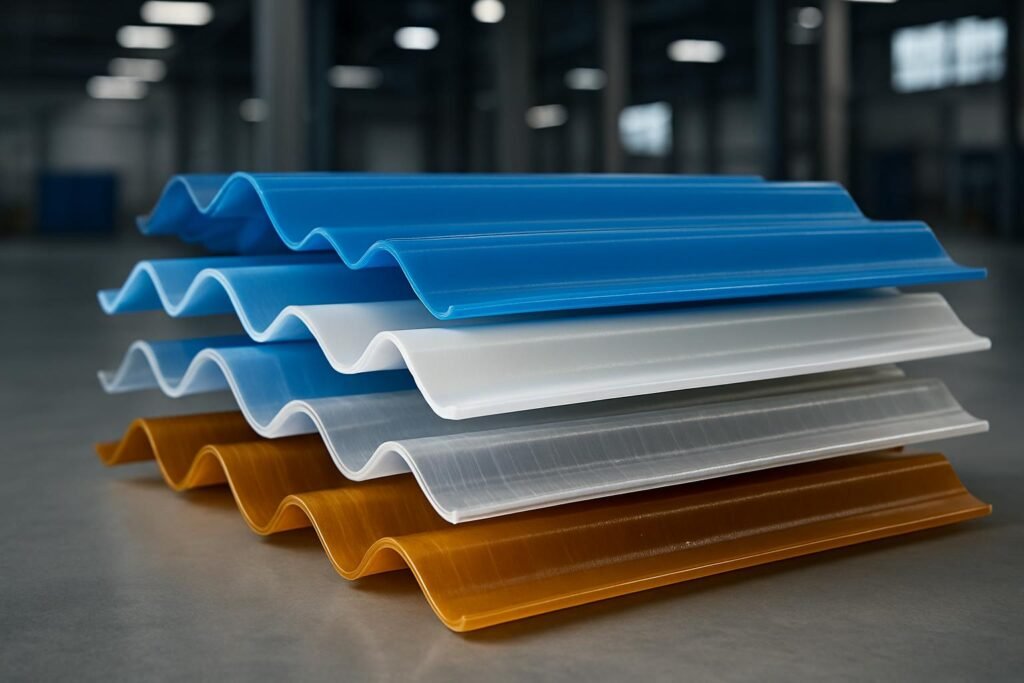
An FRP sheet is a composite panel made from glass-fiber reinforcement embedded in a polymer resin matrix. The material can be produced as a translucent skylight, corrugated roof or wall sheet, flat skin, insulated sandwich panel or honeycomb panel.
“FRP sheet” does not identify one universal product. Performance changes with resin type, glass reinforcement, fiber content, sheet structure, thickness, surface protection, color, profile, support spacing and the installation system.
Product range
FRP roofing and composite panel types
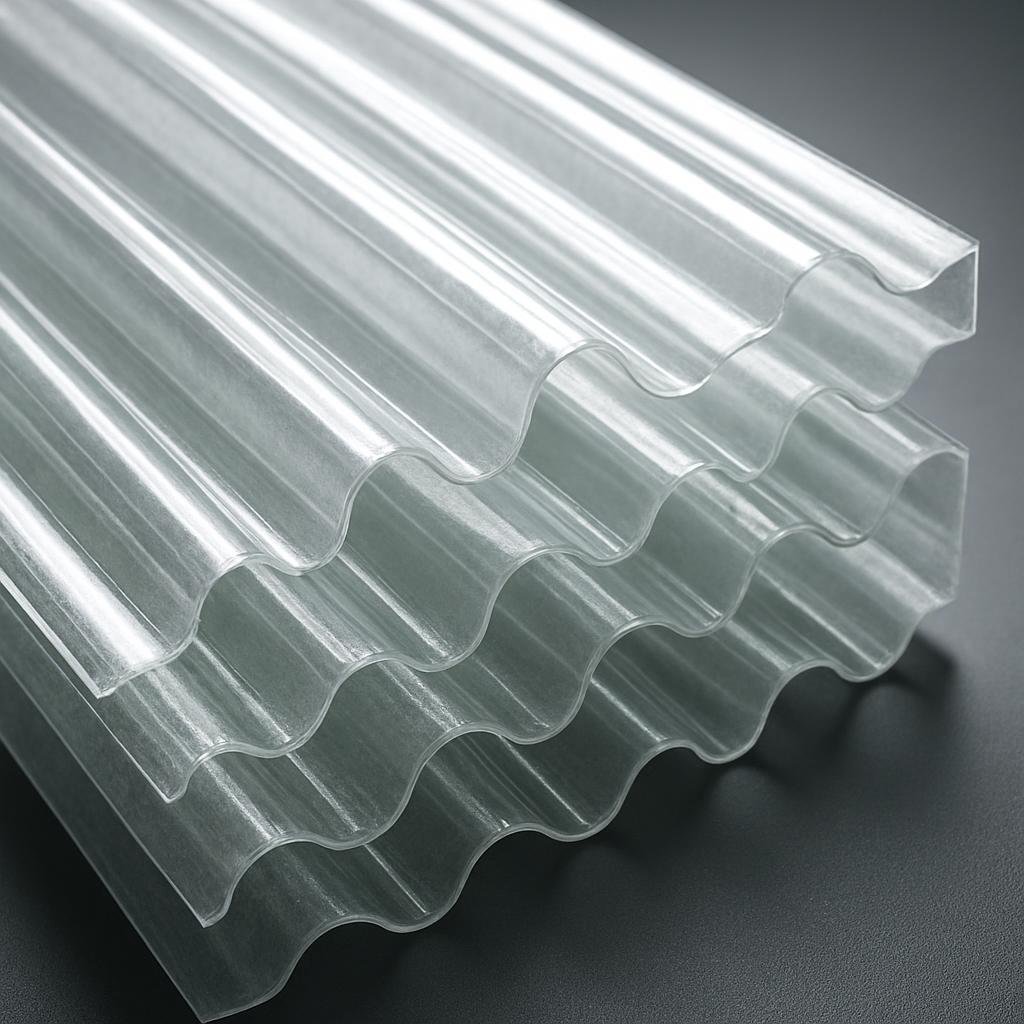
FRP Translucent Skylight Sheet
Light-transmitting fiberglass-reinforced polyester sheets for industrial skylights, roof daylight strips, greenhouses and selected stadium or canopy areas.
- Published thicknesses: 1.5, 2.0, 2.5 and 3.0 mm
- Published colors: transparent, lake blue, royal blue, brown and milky white
- Light transmission and UV surface confirmed by grade
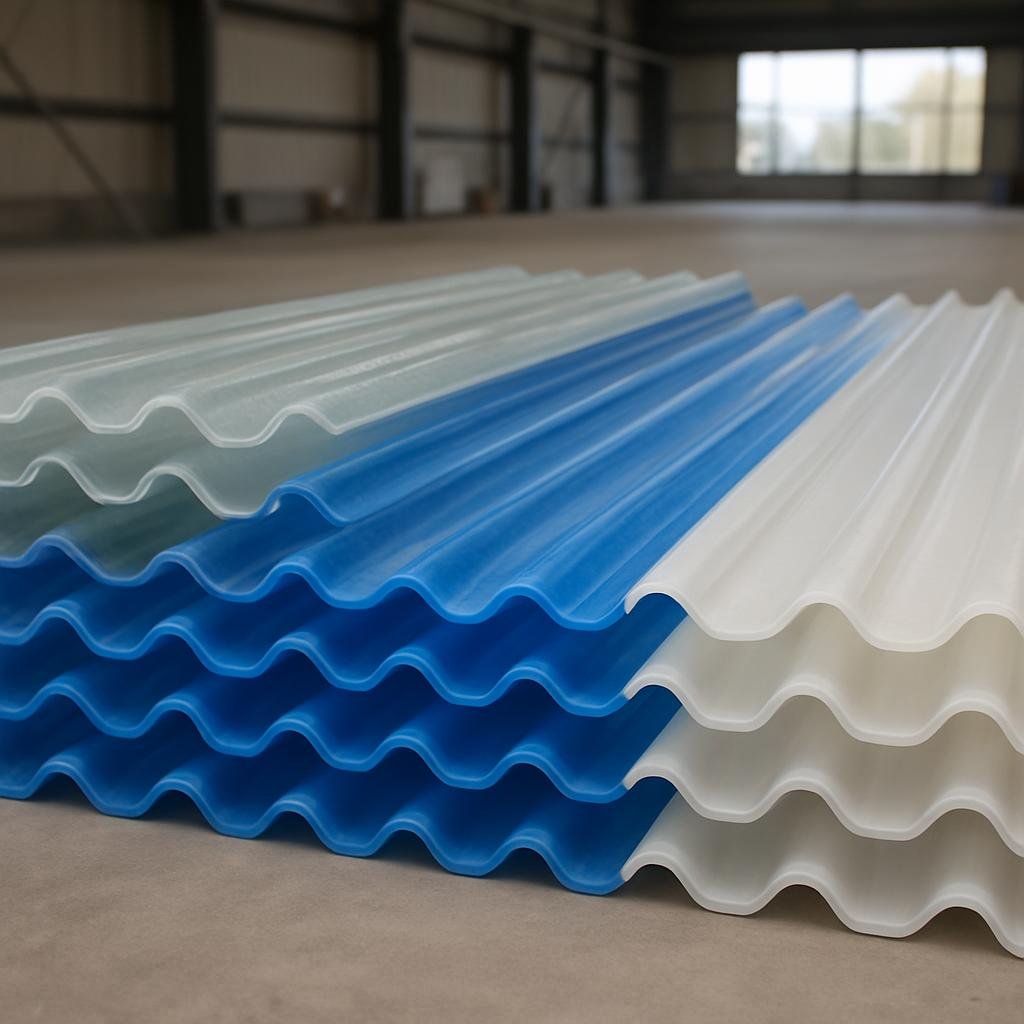
Corrugated FRP Roofing Sheet
Profiled FRP sheets for industrial roofs, wall cladding, agricultural buildings and projects requiring drainage and profile matching.
- Published thicknesses: 2.0, 2.5 and 3.0 mm
- Published colors: transparent, lake blue, royal blue, brown and milky white
- Profile drawing and effective width required
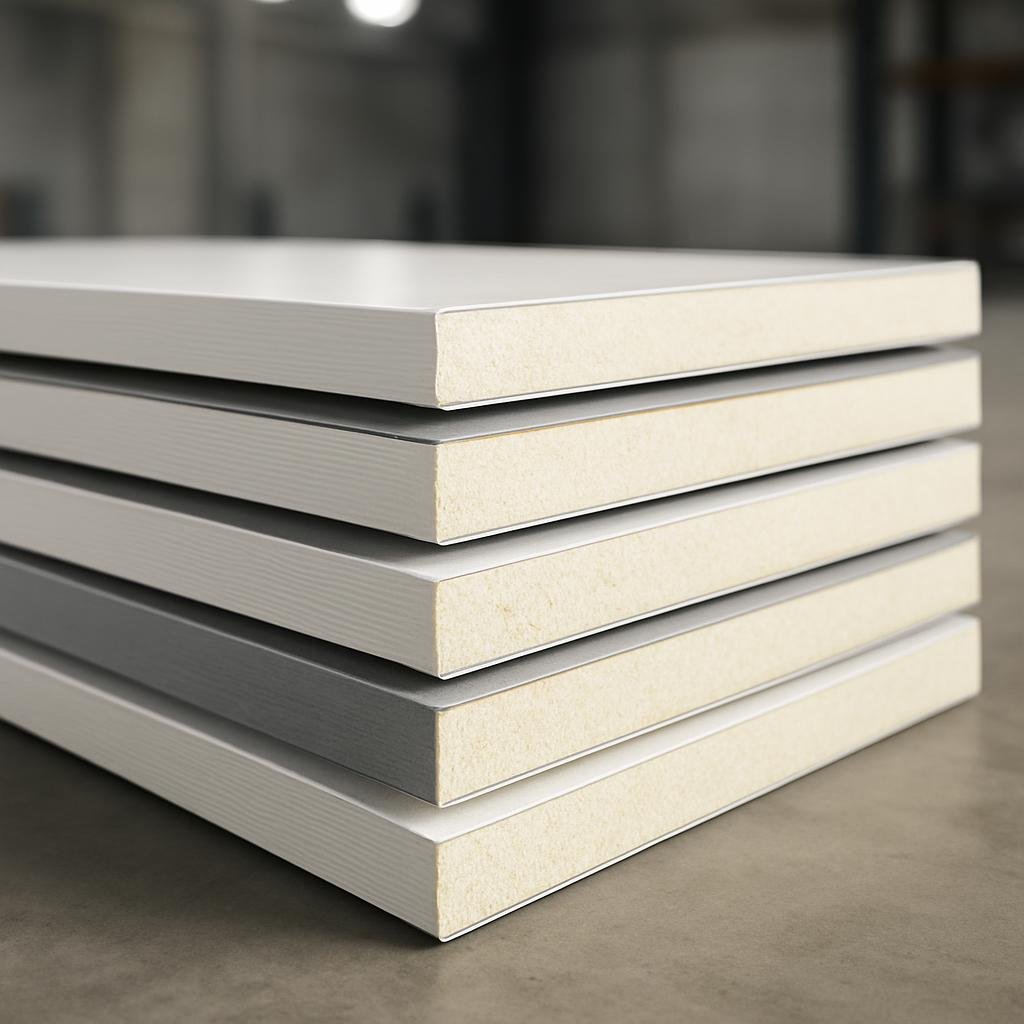
FRP Insulated Composite Panel
FRP-faced insulated panels for cold rooms, food-processing environments and interior enclosures requiring a composite wall or ceiling build-up.
- Published thicknesses: 50, 75, 100 and 150 mm
- Published colors: white, light grey and dark grey
- Core, facing, joint and hygiene requirements confirmed by project
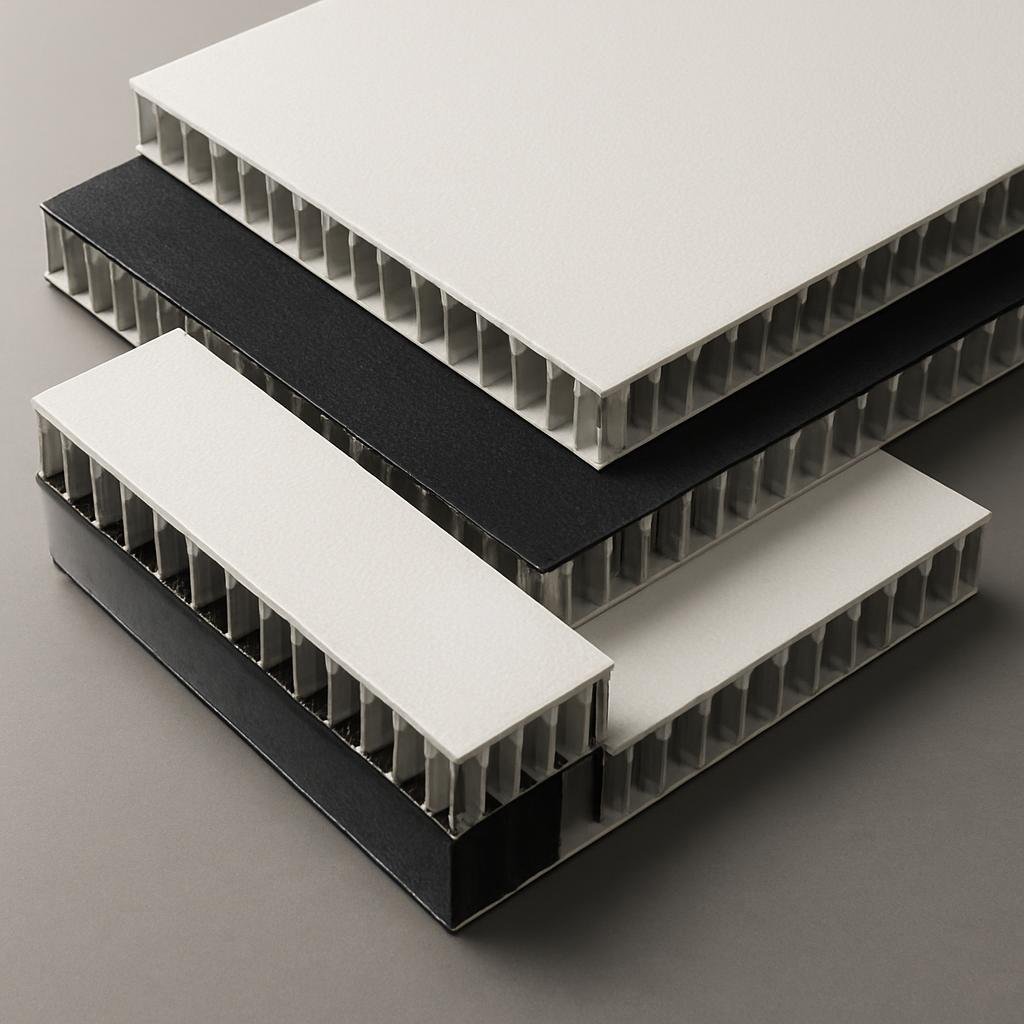
FRP Honeycomb Panel
FRP-faced honeycomb composite panels for lightweight enclosures, partition systems, equipment panels and selected architectural applications.
- Published thicknesses: 25, 40, 50 and 75 mm
- Published colors: white, black, grey and custom colors
- Face sheet, core, edge closure and load data confirmed by model
Published specifications
Current FRP product data from the live collection page
| Product type | Published thickness | Published colors | Published application | Confirm before order |
|---|---|---|---|---|
| FRP translucent skylight sheet | 1.5 / 2.0 / 2.5 / 3.0 mm | Transparent, lake blue, royal blue, brown, milky white | Industrial plants, greenhouses, stadiums and natural-lighting areas | Resin, glass reinforcement, light transmission, UV surface, profile, width and length |
| Corrugated FRP sheet | 2.0 / 2.5 / 3.0 mm | Transparent, lake blue, royal blue, brown, milky white | Industrial roof and wall cladding | Total width, effective width, wave pitch, height, overlap, support spacing and fasteners |
| FRP insulated composite panel | 50 / 75 / 100 / 150 mm | White, light grey, dark grey | Cold storage, food processing and thermal-insulation areas | Core type, density, facing thickness, joint detail, thermal data and hygiene requirements |
| FRP honeycomb panel | 25 / 40 / 50 / 75 mm | White, black, grey, custom colors | Industrial and construction composite panels | Skin thickness, core material, cell structure, edge closure, load data and fire documents |
No universal light-transmission percentage, load/span value, fire rating, service life or chemical-resistance rating is applied to every FRP sheet on this page.
Selection guide
Choose the FRP structure by project requirement
| Project requirement | Recommended starting product | Key confirmation |
|---|---|---|
| Industrial natural daylight | FRP translucent skylight sheet | Light transmission, profile match, UV surface and daylight layout |
| Opaque or colored roof/wall | Corrugated FRP sheet | Resin, color, profile, effective width, support and fasteners |
| Cold room or food-processing enclosure | FRP insulated composite panel | Core, joint, thermal data, cleaning and food-area compliance |
| Lightweight enclosure or partition | FRP honeycomb panel | Face, core, edge, insert and load requirements |
| Strong chemical exposure | Project-specific resin FRP sheet | Chemical name, concentration, temperature, contact duration and cleaning cycle |
| Existing roof profile replacement | Corrugated or translucent FRP | Physical sample or dimensioned cross-section for profile matching |
Applications
Where FRP sheets are used
Industrial Roof Daylighting
Profile-matched translucent strips for factories, workshops and large roof areas.
Architectural Roofs & Walls
Translucent or colored panels for façades, canopies, walls and selected roof zones.
Greenhouses & Agriculture
Review crop-light target, diffusion, condensation, ventilation and climate.
Protected Growing Areas
Use project-specific translucent panels with the approved frame and edge details.
Machine & Equipment Enclosures
Composite skins and panels for housings, barriers and industrial partitions.
Industrial Facilities
Roof, wall and enclosure panels selected for the actual process environment.
Material specification
Specify the resin, glass reinforcement and surface layer
Two FRP sheets with the same thickness can perform differently because the resin, fiber structure, glass content and surface protection are different.
Performance review
Evaluate the complete FRP sheet specification
Corrosion compatibility
Match resin and surface construction to each chemical, concentration, temperature and contact cycle.
Light transmission
Confirm the value for the exact translucent grade, thickness, color and test method.
Load and span
Use profile-specific engineering data with support spacing, wind, snow and safety factors.
Weathering and UV
Confirm the external surface, orientation, weathering test and maintenance conditions.
Fire behavior
Use the required standard, exact resin grade, thickness, mounting and current test report.
Thermal and hygiene data
For insulated panels, confirm core, thermal performance, joints, cleaning and project compliance.
Chemical exposure
“Corrosion-resistant” is not a universal compatibility statement
Chemical resistance depends on the resin system and the actual exposure. A product suitable for moisture or salt air may not be suitable for concentrated acids, alkalis, solvents or high-temperature process fumes.
- Chemical name
- Concentration
- Normal temperature
- Maximum temperature
- Continuous or intermittent contact
- Fume, splash or immersion
- Cleaning chemicals
- Required service inspection
Fire and smoke
Do not describe all FRP panels as fireproof
Standard and fire-retardant resin systems can behave differently. The exact product, thickness, reinforcement, surface, mounting and test method must match the project requirement.
- Required local standard
- Flame-spread requirement
- Smoke requirement
- Exact resin grade
- Sheet or panel thickness
- Mounting and substrate
- Report validity
- Project authority approval
Profile matching
Dimensions required for corrugated FRP roofing
Total width
Full manufactured width measured edge to edge before installation.
Effective width
Net installed coverage after the required side overlap.
Wave pitch and height
Center-to-center repeat and vertical profile depth for compatibility.
Side-lap geometry
Male/female edge, corrugation count and prevailing installation direction.
Finished length
Coordinate roof slope, end overlap, handling, transport and thermal movement.
Support spacing
Use profile-specific load data and local design requirements.
Fastener position
Confirm crest/valley location, washer, drilling allowance and support material.
Opaque-sheet match
Trial-fit FRP daylight sheets with the surrounding roof profile before supply.
Installation workflow
Plan the FRP sheet installation before production
Confirm drawings
Approve roof planes, profiles, lengths, overlaps, supports, accessories and daylight layout.
Prepare supports
Check alignment, spacing, contact width, corrosion protection and drainage.
Cut and fasten
Use suitable tools, supported drilling, compatible fasteners and controlled tightening.
Inspect the system
Check laps, flashing, seals, drainage, damaged surfaces and safe maintenance access.
Material comparison
FRP vs polycarbonate vs PVC roofing vs metal
| Selection factor | FRP sheet | Polycarbonate sheet | PVC / UPVC roofing | Coated metal roofing |
|---|---|---|---|---|
| Material structure | Glass-fiber-reinforced resin composite | Solid or multiwall thermoplastic | Rigid plastic roofing profile | Metal substrate with metallic or organic coating |
| Typical strength | Corrosion-selected roofing, daylight and composite panels | Optical clarity, impact glazing and insulated multiwall sheets | Opaque industrial or decorative roofing | Long-span structural roof and wall systems |
| Daylighting | Translucent grades available | Clear, translucent and diffused grades available | Separate translucent PVC products may be used | Requires compatible skylight or daylight panels |
| Corrosion review | Resin and chemical compatibility required | Chemical compatibility with cleaners and sealants required | Formulation and exposure review required | Coating, cut edges, fasteners and maintenance are critical |
| Installation priority | Profile, support, drilling, fasteners and resin-safe details | Thermal movement, profiles, UV side and sealing | Profile, overlap, fasteners and thermal movement | Panel system, clips, coatings, edges and corrosion control |
| Related page | Current FRP collection | Polycarbonate Sheets | PVC Roofing Products | Request a project-specific comparison |
Quality control
Inspection points for FRP sheet orders
Resin and reinforcement record
Identify the approved resin system, reinforcement and production batch.
Thickness and dimensions
Measure length, width, thickness and panel/profile geometry using the agreed method.
Profile and overlap fit
Trial-fit corrugated sheets and confirm total/effective width and side-lap geometry.
Surface and appearance
Inspect bubbles, cracks, exposed fibers, dry areas, deformation, color and edge damage.
Light and color inspection
Compare translucent or colored production with the approved physical sample.
Composite-panel bond
Check facing, core, edge closure, flatness and bond quality for sandwich/honeycomb panels.
Project-specific testing
Use the required chemical, mechanical, fire, optical or thermal test method.
Accessory compatibility
Confirm fasteners, washers, seals, flashing and adjacent roof-profile fit.
Packing inspection
Protect faces and edges, separate lengths, verify labels, quantity and pallet stability.
OEM & customization
FRP sheet customization to discuss
Resin system
Select according to chemical exposure, temperature, weathering and fire requirements.
Profile and structure
Review corrugated geometry, flat skins, insulation core or honeycomb construction.
Thickness and dimensions
Confirm the available thickness, total/effective width, finished length and tolerance.
Color and translucency
Approve transparent, blue, brown, milky white, grey, black or custom samples.
Surface protection
Discuss UV film, gel coat, resin-rich finish or project-specific surface treatment.
Packaging and labels
Coordinate bundle labels, private label, edge protection, pallets and loading sequence.
Packing & export
Protect profiles, translucent faces and composite edges
RFQ checklist
Send the material, profile and environment together
A complete enquiry allows the factory to review the correct FRP product and quotation.
- Project country and site
- Buyer type or company
- Roof, wall, daylight or panel use
- Product type
- Resin requirement
- Chemical exposure details
- Thickness
- Total and effective width
- Profile drawing or sample
- Finished length
- Color or light target
- UV surface requirement
- Fire and smoke requirement
- Wind, snow and support spacing
- Fasteners and accessories
- Order quantity
- Packaging and labels
- Destination port
Related pages
Continue through the product and application cluster
Frequently asked questions
FRP sheet purchasing questions
The current collection includes translucent skylight sheets, corrugated roof or wall sheets, insulated composite panels and honeycomb panels.
Translucent sheets are published at 1.5, 2.0, 2.5 and 3.0 mm; corrugated sheets at 2.0, 2.5 and 3.0 mm; insulated panels at 50, 75, 100 and 150 mm; honeycomb panels at 25, 40, 50 and 75 mm.
Translucent and corrugated sheets list transparent, lake blue, royal blue, brown and milky white. Insulated panels list white, light grey and dark grey. Honeycomb panels list white, black, grey and custom colors.
Provide the chemical name, concentration, temperature, contact type and cleaning cycle. The resin and surface construction should be confirmed against the complete exposure.
Translucent FRP sheets are used for daylighting. The exact light-transmission value must be confirmed for the selected thickness, color, reinforcement and surface grade.
They can be evaluated when total width, effective width, wave pitch, profile height, side-lap geometry and fastener position match the surrounding roof.
No universal chemical-resistance claim applies to every FRP grade. Compatibility depends on the resin, reinforcement, surface, chemical, concentration, temperature and exposure duration.
No. Standard and fire-retardant FRP grades differ. Request a current test report for the exact resin, thickness, reinforcement, mounting and required standard.
Use profile-specific load data with the sheet thickness, width, roof slope, wind, snow, temperature and local structural requirements.
Yes, using suitable tools, dust control, support and approved hole details. Protect workers from fiberglass dust and avoid damaging the surface or exposed edges.
Profile, dimensions, color, length and structure can be reviewed according to tooling, production capability, order quantity and shipping limits.
Provide the application, product type, resin/exposure, profile, thickness, dimensions, color, optical target, fire requirement, supports, accessories, quantity, packaging and destination.
Request an FRP sheet sample and quotation
Send the application, resin or chemical exposure, profile, thickness, dimensions, color, performance documents, quantity and destination port.