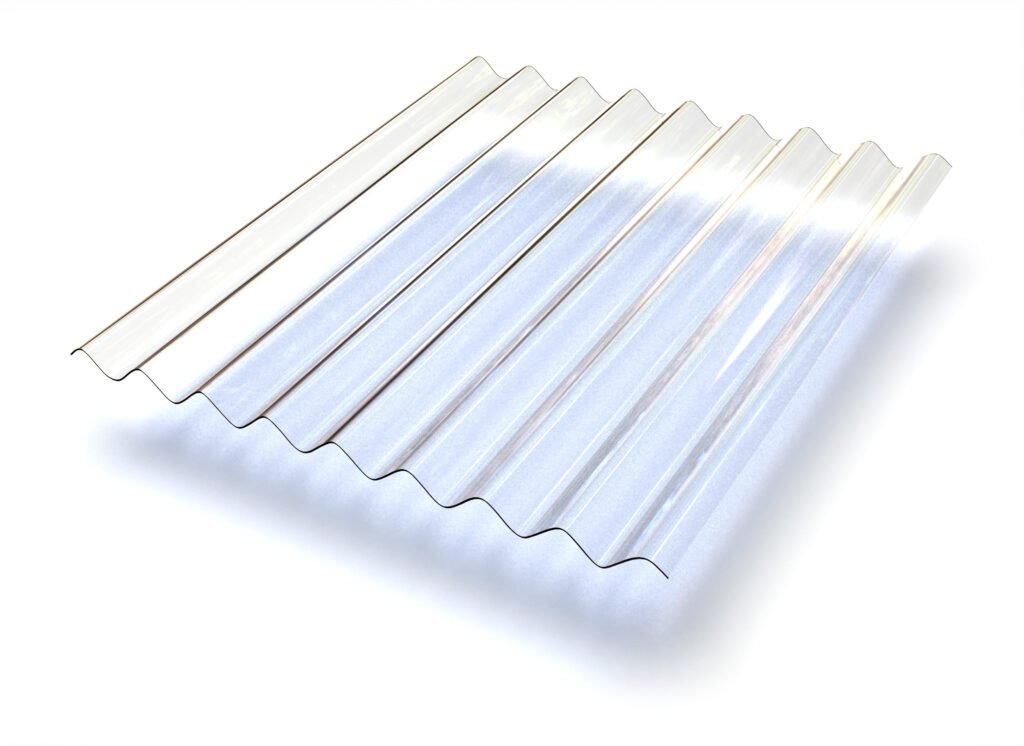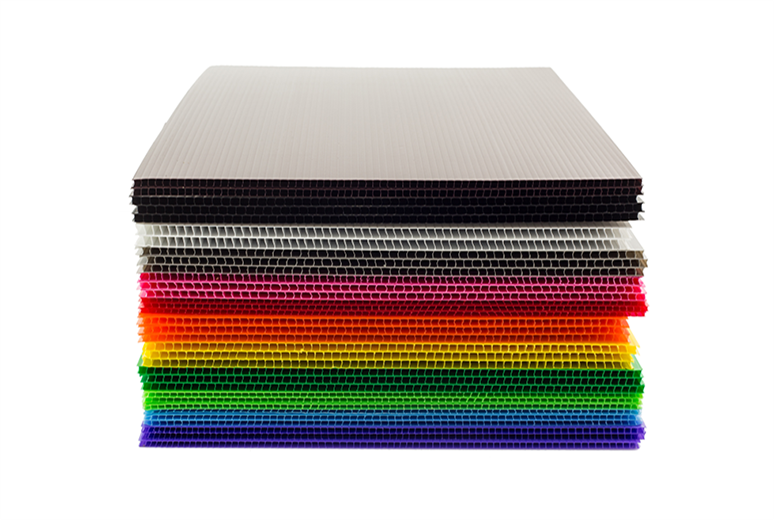


| Width (mm) | Weight, Kg/m | Weight, Kg/m | Weight, Kg/m | Weight, Kg/m |
| (0.8 mm thick) | (1 mm thick) | (1.5 mm thick) | (2 mm thick) | |
| 600 | 0.63456 | 0.7932 | 1.1898 | 1.5864 |
| 750 | 1.05984 | 1.3248 | 1.9872 | 2.6496 |
| 756 | 0.95 | 1.19 | 1.78 | 2.38 |
| 840 | 0.96 | 1.2 | 1.8 | 2.4 |
| 850 | 0.97152 | 1.2144 | 1.8216 | 2.4288 |
| 910 | 1.00512 | 1.2564 | 1.8846 | 2.5128 |
| 935 | 1.2 | 1.5 | 2.25 | 3 |
| 939.2 | 1.18 | 1.48 | 2.22 | 2.96 |
| 1000 | 1.28256 | 1.6032 | 2.4048 | 3.2064 |
| 1032 | 1.11648 | 1.3956 | 2.0934 | 2.7912 |
| 1032 | 1.19808 | 1.4976 | 2.2464 | 2.9952 |
| 1032 | 1.17984 | 1.4748 | 2.2122 | 2.9496 |
| 1050 | 1.03 | 1.29 | 1.94 | 2.59 |
| 1069 | 1.17984 | 1.4748 | 2.2122 | 2.9496 |
| 1075 | 1.20672 | 1.5084 | 2.2626 | 3.0168 |
| 1078 | 1.21536 | 1.5192 | 2.2788 | 3.0384 |
| 1090 | 1.21632 | 1.5204 | 2.2806 | 3.0408 |
| Items | Testing Method | Unit | Value |
| Density | ASTM D792 | g/cm^3 | 1.2 |
| Service Temperature (Short term) | °C | -50 to 120 | |
| Service Temperature (Long term) | °C | -40 to 100 | |
| Rockwell Hardness | ASTM D785 | R Scale | 110R |
| Light Transmission | ASTM D1003 | % | >88 |
| Haze | ASTM D1003 | % | <0.5 |
| Yellowness Index | ASTM D1925 | <1 | |
| Tensile Strength at Yield | ASTM D-638 | Mpa or N/mm² | >60 |
| Tensile Strength at Break | ASTM D-638 | MPa or N/mm² | >65 |
| Coefficient of Linear Thermal Expansion | ASTM D-696 | mm/m °C | 0.065 |
| Heat Deflection Temperature | ASTM D648 | °C | 130 |
| Coefficient of Linear Thermal Expansion | ASTM D696 | cm/cm °C | 6.5/100000 |
| Thermal Conductivity | ASTM C-177 | W/m K | 0.21 |
| Elongation at Yield | ASTM D638 | % | 7 |
| Elongation at Break | ASTM D-638 | % | >80 |
| Tensile Modulus of Elasticity | ASTM D-638 | MPa | 2400 |
| Flexural Strength | ASTM D-790 | MPa | 100 |
| Impact Falling Weight (E-50) | ISO 6603/1 E50 | J | 50 |
| Fire rating | UL 94 | / | V1, V2, V0 |
Clear Polycarbonate Sheet Fire Rating Guide and Standards
What Is a Fire-Rated Clear Polycarbonate Sheet? A fire-rated clear polycarbonate sheet is a transparent thermoplastic panel designed for projects where optical clarity, impact resistance, weatherability, and fire-performance documentation are important. Clear polycarbonate is used in applications such as commercial skylights, light strips, machine guards, and protective barriers. The term fire-rated should be used only when the specific sheet has been tested and documented under the required building or product standard. Langfang Bonai’s reference information does not list a numerical fire rating or flame-retardant code for its clear polycarbonate sheets. Buyers should therefore request the applicable technical data sheet and certified fire-test report for the selected specification. How Flame-Retardant Polycarbonate Works Flame-retardant performance depends on the material formulation, sheet construction, thickness, and verified testing. Polycarbonate sheets may also be customized with treatments such as surface hardening, while a co-extruded UV protection layer supports weather resistance during outdoor use. For safety-critical projects, fire performance should be confirmed for the exact product rather than assumed from transparency, impact strength, or general material properties. Langfang Bonai uses 100% virgin polycarbonate sourced from SABIC and Covestro and manufactures under ISO9001 quality management and CE certification requirements, but project-specific fire documentation remains necessary. Standard vs. Fire-Rated Polycarbonate Sheets A standard clear polycarbonate sheet can provide high transparency, strong impact resistance, thermal insulation, and weather resistance. A fire-rated specification requires additional evidence showing how the selected product performs under the relevant test requirements. Key selection points include: Sheet thickness and dimensions Virgin polycarbonate material specification Required fire-performance standard Application environment and installation method Certified test reports for the selected batch or grade Because specific fire-rating codes are not listed in the available product information, the final classification should be verified directly through the product’s technical documentation before approval or installation. Key Fire Rating Standards for Polycarbonate Sheets Fire performance depends on the sheet formulation, thickness, test method, and intended application. I do not assign a specific fire rating to clear polycarbonate sheets without an official test report. Langfang Bonai provides 100% virgin polycarbonate options, ISO9001 quality management, CE certification, and custom technical support. Request the applicable technical data sheet and certified fire-test documentation for the selected specification. UL 94 Flammability Ratings (V-0, V-1, V-2) UL 94 classifications describe how a plastic sample behaves during a controlled flammability test. V-0, V-1, and V-2 are different vertical-burning classifications, but the result cannot be assumed from the material name alone. The required grade must be confirmed for the exact polycarbonate formulation and thickness. ASTM E84 and Class A Fire Ratings ASTM E84 evaluates surface burning behavior, including flame spread and smoke development, under a defined test method. A Class A result must be supported by an applicable test report for the finished sheet. It should not be inferred from transparency, UV protection, impact resistance, or thermal insulation alone. EN 13501-1 European Standards EN 13501-1 is used to classify the reaction to fire of construction products in European projects. The classification depends on the tested product configuration and installation conditions. For projects using this standard, I recommend confirming the required classification and obtaining current documentation for the selected clear polycarbonate sheet. IBC Code Compliance (CC1 vs. CC2 Ratings) IBC requirements depend on the building type, location, sheet use, thickness, and project design. CC1 and CC2 identify different levels of material combustibility in code-based evaluations, but a clear polycarbonate sheet should not be assigned either designation without project-specific evidence. Buyers and contractors should match the product’s certified fire data with local building-code requirements before installation. Key Fire Performance Features and Benefits A clear polycarbonate sheet can combine optical transparency, impact resistance, thermal insulation, and weather resistance. However, fire performance depends on the selected grade, thickness, and verified test results. Our standard reference information does not state a specific fire rating, smoke classification, or flame-retardant code. High Ignition Temperature and Self-Extinguishing Properties A clear polycarbonate sheet should not be described as fire-rated without supporting test data. For each project, we recommend checking the official technical data sheet and certified fire-test report for the exact product batch. Fire performance detail Verification required Ignition behaviour Product-specific test data Self-extinguishing performance Certified fire-test report Flame-retardant grade Technical data sheet Building code suitability Local project requirements Low Smoke Emission and Flame Suppression Smoke emission and flame suppression are not specified in the available product information. These properties can vary with the material grade, sheet design, thickness, and any functional treatment. We provide technical documentation for evaluation against the required project standard. The sheets are manufactured with 100% virgin polycarbonate sourced from SABIC and Covestro. Production follows ISO9001 quality management requirements and CE certification standards, while specific fire data should be confirmed for the selected specification. Optical Transparency and High Impact Strength Clear polycarbonate is suitable where visibility and physical protection are both important. Its listed performance includes: High optical transparency for building lighting and viewing areas Strong impact resistance for protective applications Thermal insulation for selected roofing and enclosure uses Weather resistance supported by a co-extruded UV protection layer Optional surface hardening or anti-fog treatment for customised requirements These properties support applications such as commercial skylights, machine guards, bank counters, and protective barrier systems. A clear polycarbonate sheet fire rating must still be confirmed through the relevant certified test report before specification. Applications of Fire-Rated Clear Polycarbonate Architectural Safety Glazing and Building Security Clear polycarbonate sheets provide optical transparency and strong impact resistance for commercial skylights, roof light strips, and building security applications. They can also be used for protective guards and transparent barriers where visibility and durability are important. Fire performance must be confirmed with the technical data sheet and certified test report for the selected grade. Electrical Enclosures and Industrial Guards The material’s impact resistance, lightweight structure, and insulation properties support use in machine guards, protective covers, and selected electrical enclosure applications. Custom thicknesses, dimensions, anti-fog treatments, and surface hardening can be specified for project needs. The applicable fire rating should be verified before installation. Public Transportation and Aviation Interiors Clear polycarbonate may
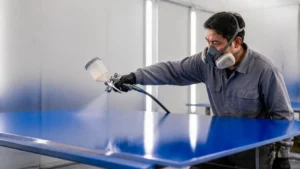
Can You Paint Polycarbonate Sheets Primer and Paint Tips
Can You Paint Polycarbonate Sheets? I get asked this technical question all the time: can you paint polycarbonate sheets without ruining their strength? The short answer is yes, but only if you execute precise surface preparation and use flexible, plastic-compatible primers and paints. Applying standard off-the-shelf paint directly to a sheet leads to quick failure. Polycarbonate presents two major physical challenges that destroy regular paint jobs: Low Surface Energy: Smooth polycarbonate naturally repels liquid coatings, preventing standard paints from forming a strong mechanical bond. Thermal Expansion and Contraction: Polycarbonate dynamically expands and contracts under heat—often experiencing surface temperatures up to 140°F. Rigid, non-flexible paints cannot move with the plastic, causing the finish to crack and flake off. Critical Warning: Avoid solvent-heavy paints containing ketones, toluene, or xylene. These aggressive solvents chemically attack the thermoplastic matrix, causing severe crazing (micro-cracking) that permanently destroys the panel’s impact resistance and structural integrity. Why Painting Polycarbonate Sheets Is Harder Than It Looks When we look at why DIY paint jobs fail on polycarbonate roof panels and sheets, it usually comes down to basic polymer chemistry. Before you pick up a paint can, you need to understand the four physical hurdles working against your paint layer. Low Surface Energy (Poor Adhesion) Polycarbonate has an extremely smooth, non-porous surface characterized by low surface energy adhesion. Standard coatings cannot bite into the material. Without a dedicated plastic bonding primer or adhesion promoter, paint simply sits on top like liquid on wax and peels away with the slightest friction. High Thermal Expansion Coefficient Polycarbonate is dynamic—it expands and contracts significantly as temperatures shift, especially under direct sunlight up to 140°F. The Problem: Rigid paints (such as traditional oil-based enamels or standard epoxies) cannot flex. The Result: As the plastic sheet expands under heat, the rigid paint skin snaps, causing widespread cracking, bubbling, and flaking. Chemical Sensitivity and Solvent-Induced Crazing Harsh solvents are the fastest way to permanently destroy polycarbonate’s structural integrity. Solvents like acetone, toluene, xylene, and MEK attack the underlying polymer matrix. Chemical Action Structural Impact Solvent Penetration Solvents soak into the molecular structure, breaking plastic bonds. Solvent-Induced Crazing Webbing micro-cracks form instantly across the surface. Strength Loss The panel loses its signature shatterproof strength and turns brittle. Co-Extruded UV Protection Layer Damage Quality panels feature a factory-applied co-extruded UV protection layer designed to block harmful solar radiation. Coarse mechanical sanding or aggressive solvent paints strip away this protective shield, exposing the bare plastic to rapid yellowing, haze, and premature aging. Chemical Compatibility: Choosing the Right Paint for Polycarbonate Sheets When you paint polycarbonate sheets, choosing the right chemical base determines whether your finish lasts or destroys the panel. Polycarbonate reacts aggressively to harsh solvents, so we only use coatings that maintain elasticity and bond without attacking the material. Recommended Paint Systems We always use flexible, plastic-compatible formulas engineered to handle panel movement and outdoor exposure: Plastic Bonding Primers: Use a dedicated plastic primer or adhesion promoter to create a durable mechanical bond on smooth surfaces. Water-Based Acrylic Primers: These provide a safe, neutral base that will not degrade the underlying polycarbonate matrix. 100% Flexible Acrylic Latex: Excellent for topcoats because it expands and contracts alongside the sheet during temperature shifts. Specialized Acrylic Sprays: Polycarbonate-safe spray paints and UV-resistant acrylics offer quick coverage while preserving panel integrity. Paints and Solvents to Avoid Applying the wrong chemical triggers solvent-induced crazing, leading to micro-cracks, cloudiness, and structural failure. Never apply: Oil-Based Paints & Alkyd Enamels: These cure into rigid, brittle shells that crack and peel as the sheet expands under heat. Harsh Solvent Sprays: Avoid paints containing acetone, MEK (methyl ethyl ketone), toluene, xylene, or lacquer thinners, which chemically melt the plastic. Rigid Epoxies: Standard two-part epoxies lack the dynamic flexibility required for plastic sheets. Paint & Coating Type Compatibility Primary Performance Characteristics Water-Based Acrylic & Latex Recommended Highly flexible, safe on plastic, weather-resistant Plastic Adhesion Promoter Recommended Maximizes paint grip without surface damage Specialized Polycarbonate Spray Recommended Safe chemical bond, fast drying, UV-stable Oil-Based Enamels Avoid Rigid finish, prone to flaking and cracking Acetone / MEK / Lacquer Sprays Avoid Causes immediate crazing and structural breakdown Step-by-Step Guide: How to Paint Polycarbonate Sheets Safely I always tell my crew that painting polycarbonate sheets successfully comes down to strict surface preparation and timing. If you skip a step, the finish will flake off as soon as the plastic expands under the sun. Here is my exact field-tested process for painting polycarbonate roof panels and solid sheets safely. Quick Prep & Painting Reference Step Prep Phase Materials & Specs Action 1 Cleaning 50/50 Isopropyl Alcohol & Distilled Water Wash with mild soap, then wipe down with a microfiber cloth. 2 Abrasion 800–1000 fine grit sandpaper Lightly scuff the surface to create a mechanical key. 3 Masking High-tack painter’s tape Seal off non-painted areas and raw edges completely. 4 Priming Plastic adhesion promoter / plastic primer Apply 1–2 thin coats; allow full flash-off dry time. 5 Topcoat Flexible acrylic spray paint or acrylic latex Apply 2–3 light, even coats to prevent cracking. 6 Curing Dust-free environment Let cure for 24–48 hours before handling or installation. Step 1: Deep Cleaning & Anti-Static Prep First, wash the panel thoroughly with warm water and mild dish soap to remove grease and job-site dust. Once dry, wipe down the surface using a 50/50 mixture of Isopropyl alcohol and distilled water with a lint-free microfiber cloth. This strips residual oil and eliminates static charge that attracts dust particles. Step 2: Light Mechanical Abrasion (Scuffing) Polycarbonate is naturally slick, so paint resists sticking to it. Lightly sand the target area using 800–1000 fine grit sandpaper. Sand gently in consistent circular motions to create a physical key for adhesion without causing deep scratches. Step 3: Masking & Edge Protection Use high-tack painter’s tape and paper to cover any sections you want to keep clear. Press the tape edges down firmly with a putty knife to prevent wet paint from bleeding underneath. Step 4: Applying Plastic Adhesion Promoter
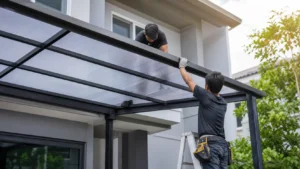
How to Install a Polycarbonate Sheet Roof Step by Step
What You Should Know Before Installing Polycarbonate Roofing Are you wondering how to install a polycarbonate sheet roof without making costly mistakes? Before diving straight into cutting and fixing panels, proper preparation is the secret to a long-lasting, leak-free installation. Taking the time to select the correct material and check your frame saves you hours of hassle down the line. Choose the Right Sheet Type Selecting the right profile depends on your project’s specific lighting, insulation, and strength requirements: Polycarbonate Sheet Type Key Features Best Application Corrugated Polycarbonate Lightweight, high light transmission, budget-friendly Carports, pergolas, utility sheds Multiwall Polycarbonate Exceptional thermal insulation (twinwall/multiwall), rigid Greenhouses, conservatories, lean-tos Solid Polycarbonate Glass-like optical clarity, maximum impact strength Skylights, security glazing, high-end patio covers At Bonai, we design each sheet profile to deliver maximum structural integrity and weather protection across various climate conditions. Check Your Roof Structure Before placing a single panel, inspect your supporting structure carefully: Rafters and Purlins: Ensure all structural timber or steel framing is securely fixed and capable of carrying local snow and wind loads. Sheet Span & Support Spacing: Check manufacturer specifications for purlin spacing to prevent panel sagging over time. Square and Level: Use a tape measure to check diagonal dimensions across the frame and verify alignment with a spirit level. Confirm Roof Pitch and Drainage Correct slope planning prevents standing water and costly roof leaks: Minimum Slope: Always maintain a minimum roof pitch of 5° (approx. 1 inch drop per 12 inches of run) to ensure proper water runoff. Preventing Water Ponding: A proper slope allows rain to naturally wash away dust and debris, keeping your channels clear and leak-free. Identify the UV-Protected Side Locate the Coating: Bonai sheets feature a branded protective film or factory label clearly marking the UV-protected side. Face Upward: Ensure this UV-coated face always points directly toward the sun to shield the panel from harsh UV degradation. Avoid Incorrect Orientation: Installing sheets upside down causes rapid yellowing, surface breakdown, and premature cracking within just a few seasons. How to Install a Polycarbonate Sheet Roof: Essential Tools and Materials Before diving into how to install a polycarbonate sheet roof, gathering the correct gear is the most important prep step. Using the right tools prevents panel cracking, ensures proper alignment, and keeps your roof 100% watertight. Core Installation Tools Having these basic job site tools ready makes the process smooth and precise: Tape measure & chalk line: For accurate layout measurements and straight alignment lines. Fine-tooth saw: A fine-tooth circular saw blade or hand saw to cut sheets cleanly without chipping. Drill & wood/metal bits: Required for pre-drilling oversized fixing holes to accommodate thermal movement. Screw gun or driver: For driving fixings fast and evenly without crushing panels. Spirit level & ladder: To check structural balance, slope angle, and work safely at height. Materials & Hardware Checklist Material / Accessory Primary Purpose Polycarbonate sheet panels Choose multiwall polycarbonate sheets or corrugated polycarbonate roofing depending on insulation and light needs. Glazing bars or H-profiles Joins panel edges neatly while leaving space for sheet expansion. U-profiles & end caps Protects exposed edge flutes and creates a neat trim line. Fixing screws with neoprene washers Specialized self-drilling screws that seal tight without cracking the surface. Solid aluminum tape Seals the top edge of multiwall panels to block moisture and dust. Breather tape Seals the bottom edge to allow trapped condensation to vent out. Wall flashing & neutral-cure sealant Waterproofs joins where sheets connect to existing structures or walls. Note: At Bonai, we pair our heavy-duty sheeting with specialized UV-stable profiles and neutral-cure silicones to maximize the lifespan of your setup. Recommended Safety Gear Safety glasses & dust mask: Blocks flying fine dust and shavings created when cutting panels on site. Work gloves: Prevents cuts when handling freshly cut panel edges and sharp flashings. Non-slip footwear: Ensures safe traction on ladders and temporary work platforms. Planning the Layout Before You Cut Careful preparation is the secret to a leak-free polycarbonate roofing installation. Before cutting a single panel, taking exact measurements and planning your sheet orientation prevents costly material waste. Here is how I set up the layout when learning how to install a polycarbonate sheet roof for maximum durability and water resistance. Measure the roof accurately Always measure your frame’s width, slope length, and diagonal squareness before trimming any materials. Overall Dimensions: Measure the length of the rafters and purlins at three different points (left, center, right) to catch any structural variations. Overhang Allowance: Add a 2-inch (50 mm) overhang at the lower edge so rainwater drains directly into the gutter without backing up under the frame. Effective Sheet Coverage: Account for side overlaps or joining bar widths when calculating total panel count, as sheet coverage width is less than actual sheet width. Measurement Area What to Check Key Tip Roof Slope Rafter length Add 2″ overhang into the gutter Roof Width Purlin span Deduct space for end caps and side trims Frame Squareness Diagonal corner-to-corner Ensure diagonal measurements match within 1/8″ Plan sheet direction and flute alignment Positioning panels correctly ensures smooth water runoff and proper condensation management. Drainage Slope: Lay sheets parallel to the roof slope so water flows freely toward the gutter. Flute Orientation: For multiwall polycarbonate sheets, run the internal channels (flutes) vertically down the slope. This allows trapped condensation to escape through the lower breather tape. Prevailing Winds: On corrugated roofs, start laying sheets from the side opposite the prevailing wind to prevent wind-driven rain from forcing its way under the side overlaps. Allow for thermal expansion gap Polycarbonate expands in summer heat and contracts in winter cold. Leaving space for movement prevents warped panels and noisy creaking. Edge Clearance: Leave a 1/4-inch (6 mm) expansion gap between panel edges and adjacent walls, side profiles, or ridge caps. Oversized Holes: Always pre-drill screw holes 1/16 to 1/8 inch (2–3 mm) wider than the fastener shank to let the sheet shift without cracking. Flexible Fastening: Avoid tight fixing points that restrict natural
Roofing Sheets Online Durable Metal Roof Panels for Sale
Modern Roofing Sheets and Building Panels Are your current roofing panels cracking under intense UV exposure? Do you struggle to find building materials that balance high light transmission with heavy-duty impact resistance? Choosing the right roofing material is a critical decision that dictates the long-term success of any industrial, commercial, or agricultural project. Traditional materials often fall short in modern applications, making the shift to advanced composite panels essential for lasting performance. Why Roofing Sheet Selection Matters Today Modern construction demands materials that do more than just keep the rain out. Selecting the correct roofing sheets directly impacts the structural integrity and operational costs of your facility. A precise material choice ensures: Maximum Durability: Resistance to chemical corrosion, extreme weather, and UV degradation. Energy Efficiency: Optimal thermal insulation and controlled daylighting for lower energy bills. Structural Safety: High impact resistance and compliance with strict fire ratings. Cost Efficiency: Reduced maintenance cycles and longer service life. About Bonai and https://roofing-sheet.com/ I operate Langfang Bonai, a premier roofing sheet manufacturer in China. Through our global platform at https://roofing-sheet.com/, we partner with international buyers to deliver high-quality building panels and custom industrial material solutions. We do not compromise on raw materials. Our production lines exclusively utilize 100% virgin polycarbonate resins from world-renowned brands like SABIC and Covestro. By leveraging internationally leading co-extrusion machinery, we apply a uniform, strong UV co-extrusion layer that guarantees maximum weather resistance. Every product we manufacture is backed by complete ISO9001 quality management compliance and CE certification, ensuring you receive a reliable, standardized product every time. Who This Guide Is For I built this guide for the professionals making the hard purchasing decisions. This resource is specifically designed for: Contractors and Builders: Seeking reliable industrial roofing solutions and fast installation. Engineers and Architects: Requiring exact specifications, structural durability, and custom roofing sheet production. Agricultural Facility Managers: Sourcing UV-resistant panels for greenhouse environments. International Buyers: Looking for a robust supply chain, transparent quote sourcing, and seamless global shipping from a trusted factory in Langfang City. This guide cuts through the noise to provide a clear, fact-based framework so you can specify and source the exact building panels your project requires. Core Roofing and Panel Materials Choosing the right material dictates the lifespan, durability, and performance of your building. We manufacture a specialized range of roofing sheets and cladding panels designed to meet distinct structural and environmental demands. PVC and UPVC Roofing Sheets and Tiles Our PVC roofing sheets and UPVC roof tiles are engineered for maximum corrosion resistance and thermal stability. For residential and commercial projects seeking a traditional aesthetic with modern performance, we produce high-grade ASA UPVC roof tiles, including Spanish PVC roof tiles and Roma PVC roof tiles (often specified as Teja roof sheets). These materials feature a co-extruded anti-UV layer that prevents fading and degradation under intense sunlight, making them an excellent choice for coastal areas and chemical plants. Polycarbonate Roofing Sheets When projects require structural strength combined with optical clarity, our polycarbonate roofing sheets deliver high impact resistance. We manufacture two primary variants: Hollow polycarbonate sheets: Multi-wall structures that provide exceptional thermal insulation and lightweight handling, ideal for greenhouse polycarbonate panels and commercial skylights. Solid polycarbonate sheets: Ultra-high impact resistant panels that offer glass-like transparency, perfect for security glazing, canopy roofing sheets, and heavy-duty carport roofing sheets. All of our polycarbonate options feature advanced UV-resistant roofing panels technology to prevent yellowing over time. FRP (Fiberglass Reinforced Plastic) Sheets For heavy industrial environments, FRP roofing panels offer unmatched strength-to-weight ratios. These fiberglass reinforced plastic sheets resist harsh chemical vapors, industrial emissions, and extreme weather. Our FRP translucent roofing sheets and FRP skylight panels are widely used as daylighting roof panels in factory designs, allowing natural light to filter through while maintaining the structural integrity of the roof. PP Corrugated Boards Our PP corrugated board solutions provide a lightweight, flexible, and cost-effective option for temporary structures, protective packaging, sub-roofing layers, and lightweight signboards. As a direct manufacturer, we supply these in various custom thicknesses and densities to fit specific industrial applications. PVC Decorative Boards for Ceilings and Wall Panels Beyond external roofing, we manufacture durable interior solutions. Our PVC ceiling and wall panels and PVC decorative wall panels serve as hygienic, moisture-resistant interior cladding panels. These PVC ceiling boards are easy to clean, simple to install, and ideal for food processing facilities, car washes, and commercial interiors requiring strict moisture control. Material Type Key Feature Common Application UPVC / ASA PVC Anti-corrosion, traditional aesthetics Chemical plants, warehouses, residential roofs Polycarbonate High impact resistance, high light transmission Polycarbonate greenhouse roofs, skylights, pergolas FRP (Fiberglass) Industrial strength, chemical resistance Factory roofs, heavy industrial cladding PP Corrugated Lightweight, waterproof, flexible Temporary structures, protective layering PVC Decorative Moisture-proof, hygienic, low maintenance Interior walls, commercial ceiling linings Key Performance Criteria for Roofing Sheets Choosing the right roofing sheets means looking past the initial price tag. You need to know how the material handles real-world stress over time. We evaluate our building panels against strict performance benchmarks so your project stands up to the elements. Durability and Lifespan The actual roofing sheet lifespan depends heavily on UV protection and weather resistance. PVC and UPVC: Coated with an ASA layer to prevent fading, lasting 20 to 30 years without cracking. Polycarbonate: Built with co-extruded UV protection to prevent yellowing and brittleness. Premium polycarbonate roofing sheets routinely deliver a service life of 15 to 20 years. FRP (Fiberglass): Uses high-quality anti-aging films to achieve a solid 15-to-25-year operational life in harsh environments. Structural and Impact Performance Roofing panels must endure high wind loads, snow accumulation, and physical impacts like heavy hail. Material Type Impact Resistance Profile Best Use Case Solid Polycarbonate Virtually unbreakable; 250 times stronger than glass High-risk hail zones & safety canopies FRP Panels High tensile strength; flexible but resists denting Industrial roofs with high wind loads UPVC Sheets High rigidity; minimal flexing under load Heavy rainfall and standard structural roofs Corrosion and Chemical Resistance Industrial environments destroy traditional metal roofing through rust
Roofing Sheets Metal Corrugated Box Profile Direct Supply
Are you overwhelmed trying to find the perfect roofing sheet for your next project? Picking the wrong material can turn a simple build into a leaking, costly nightmare. Whether you are a homeowner tackling a backyard shed or a contractor managing a massive commercial site, you need more than just a list of materials—you need the right fit for your climate, budget, and design. From ultra-durable box profile and classic corrugated steel to light-maximizing polycarbonate, the options can feel endless. That is why I have put together this definitive, no-nonsense guide. We are skipping the fluff and getting straight to what actually matters: exact material breakdowns, real price comparisons, and how to choose the precise thickness and finish for your build. Let’s get started. Core Categories of Synthetic Roofing Sheets When you are sourcing from roofing-sheet.com, picking the right material is the difference between a roof that fails in five years and one that lasts for decades. We manufacture and supply four core categories of synthetic thermoplastic roofing panels engineered for global industrial, commercial, and residential markets. Synthetic Resin Roof Tile & UPVC Sheets Our synthetic resin roof tile and UPVC sheet selection blends traditional aesthetics with modern industrial defense. We design these in two main profile varieties: elegant Spanish/Roma tile effects for residential areas, and heavy-duty industrial corrugated profiles for factories. Key Attributes: Built with a specialized chemical anti-corrosion layer, these sheets offer structural elasticity and excellent sound-deadening properties during heavy rain. Best For: Coastal structures facing salty air, chemical processing plants, and premium residential roofs. Polycarbonate Roof Panels For projects that require transparency without sacrificing strength, our polycarbonate roof panels deliver elite performance. These architectural glazing solutions balance natural light with high thermal insulation co-efficients. Form Factors & Light Transmission We manufacture these in two specific structural builds to match your exact climate needs: Twin-wall polycarbonate sheets: Multi-wall hollow configurations designed for high thermal retention. Solid architectural panels: Flat, ultra-clear sheets with maximum impact resistance. Light Transmission Benefit: These clear corrugated sheets maximize natural daylighting while filtering out harmful UV rays and mitigating infrared heat gain. Learn more about our specialized options at roofing-sheet.com/polycarbonate-sheets/. Fiberglass Reinforced Plastic (FRP) Sheets Our fiberglass reinforced plastic (FRP) sheets are the ultimate choice for brutal industrial environments. We cross-link premium thermosetting polyester resins with high-strength glass fibers to create an armor-like panel. High Strength-to-Weight Ratio: Exceptional tensile strength without adding heavy structural loads to your building framework. Non-Conductive Safety: High electrical and thermal insulation safety ratings. Severe Weather Resistance: Completely immune to rust, deep freezes, and intense heat waves. Best For: Industrial factory warehouses, steel plant skylights, and heavy commercial infrastructure. Polypropylene (PP) Corrugated Boards When your project demands a lightweight, flexible, and cost-effective barrier, our polypropylene (PP) corrugated plastic roofing boards deliver. Material Properties: A 100% moisture-proof, lightweight thermoplastic polymer that is fully recyclable. Practical Use Cases: Temporary construction shelters, protective job-site partitions, and interior industrial ceiling systems. Technical Specifications Comparison Material Category Primary Profile Types Top Feature Best Environmental Fit PVC & UPVC Sheet Specification Spanish Tile, Industrial Corrugated Chemical Anti-Corrosion Acid rain zones, coastal areas, chemical plants Polycarbonate Sheets Twin-wall, Solid, Corrugated High Impact Resistance & Clarity Commercial greenhouses, architectural skylights FRP Sheets Industrial Skylight Panels Tensile Strength & Non-Conductive Steel mills, heavy industrial warehouses Polypropylene (PP) Boards Flat Fluted, Light Corrugated 100% Moisture-Proof & Recyclable Temporary structures, interior partitions The Engineering Behind Premium Performance: Longevity Factors When we design our high-performance roofing sheets, we engineer them to withstand the harshest environmental elements. The secret to their decades-long lifespan lies in advanced material science and strict production standards. The Co-Extrusion Advantage Multi-layer co-extrusion technology fuses separate material layers into a single, high-strength panel during manufacturing. This process applies a uniform, high-concentration UV-protective surface layer directly onto the sheet. Prevents Yellowing: Shields the core polymer from solar degradation. Blocks Embrittlement: Keeps the panels flexible so they won’t crack under impact. Eliminates Delamination: Fuses layers permanently so they never peel apart. Raw Material Sourcing Matters The choice of raw ingredients directly dictates how your roof handles extreme weather. We utilize 100% virgin resins rather than cheap, recycled material blends. Performance Metric 100% Virgin Resins Recycled Material Blends Tensile Strength High & consistent Low & brittle Dimensional Stability Excellent under extreme heat/cold Prone to warping and cracking UV Resistance Extended lifespan (15+ years) Rapid yellowing within 2–3 years International Compliance & Certification We ensure our thermoplastic roofing panels meet rigorous quality benchmarks like ISO9001 and CE marks. For commercial project approvals, certified testing is non-negotiable. Our panels undergo standardized testing for structural structural loading capacities, fire ratings, and extreme environmental resistance to guarantee safe, long-term performance on every building site. Strategic Application Mapping: Matching Materials to Industries Choosing the right profile isn’t just about picking a durable material; it is about matching specific engineering properties to your facility’s environmental demands. Over years of supplying global projects at roofing-sheet.com, we have mapped out exactly where each synthetic variant delivers the highest return on investment. Commercial & Industrial Infrastructure Industrial facilities require materials that withstand harsh, corrosive environments while maintaining structural integrity over decades. Factory & Heavy Industrial Roofing: Standard metal corrodes rapidly in chemical environments. Our anti-corrosion roof tiles offer absolute resistance to acid and alkali vapors. Warehouse Daylighting Belts: Maximizing natural light reduces energy costs. Integrating high-performance FRP roofing sheets into industrial layouts creates resilient skylight zones that do not yellow or crack under intense sun exposure. Agricultural Sector Optimization Modern agriculture demands strict environmental control, whether you are managing delicate microclimates or harsh livestock conditions. High-Yield Commercial Greenhouses: We engineer specialized greenhouse roofing material that perfectly balances light diffusion with thermal energy preservation, preventing hotspot leaf burns while maintaining optimal indoor temperatures. Livestock Building Roofing: Animal housing generates high levels of ammonia and chemical vapors. Our thermoplastic roofing panels resist these corrosive gases completely while deadening rain noise to keep livestock calm. Urban & Residential Architecture For commercial walkways, public spaces, and modern homes, aesthetics must blend seamlessly with high
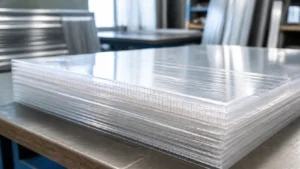
Polycarbonate Sheets Custom Cut Durable UV Resistant
Are you trying to find the right polycarbonate sheets for your roofing, greenhouse, or safety glazing project? Pick the wrong material, and you risk dealing with yellowing panels, poor thermal insulation, or brittle plastic that cracks at the first sign of extreme weather. Pick the right one, and you get a lightweight shield that is 250 times stronger than glass and built to last for decades. Whether you need ultra-durable clear flat sheets, insulating UV-protected multiwall panels, or custom cut-to-size Lexan sheeting, this guide breaks down exactly how to choose the ideal thickness, tint, and profile for your budget. Let’s dive right in! What Are Polycarbonate Sheets? Glass shatters under heavy impact, and basic acrylic panels quickly turn brittle in intense sunlight. Polycarbonate sheets solve these exact problems. Engineered as high-performance thermoplastic panels, they combine optical clarity with extreme structural toughness and weather resistance. Polycarbonate Sheets vs. Traditional Materials Performance Feature Polycarbonate Sheets Glass Standard Acrylic Impact Strength Up to 200x glass Low (Shatters easily) 10x–17x glass Weight 50% lighter than glass Heavy 50% lighter than glass Light Transmission Up to 89–90% ~90% ~92% Shatter Safety Shatterproof safety profile High risk of dangerous shards Moderate brittle fracture risk Flexibility Cold-bendable on site Rigid Limited flexibility Why Polycarbonate Sheets Are Widely Used As a leading producer, we see global industries transitioning to these panels due to their distinct advantages: Unmatched Impact Resistance: These impact resistant plastic sheets absorb extreme force without cracking, protecting structures against severe hail, vandalism, and accidental force. Lightweight Efficiency: Weighing a fraction of traditional glazing, they serve as ideal lightweight roofing panels, drastically cutting freight costs and simplifying structural framing. All-Weather Durability: Formulated to handle severe temperature swings without warping, yellowing, or losing strength. Versatile Formats: Available as crystal-clear solid polycarbonate sheet panels, heat-retaining multiwall polycarbonate sheets, and fast-draining corrugated polycarbonate sheets for any indoor or outdoor application. Main Types of Polycarbonate Sheets When selecting materials for your project, choosing the right structural profile is key. We offer several distinct types of polycarbonate sheets engineered to deliver specific performance advantages, from bullet-resistant strength to high thermal insulation. Solid Polycarbonate Sheet Features: Delivers glass-like optical clarity with up to 250 times the impact strength of standard glass. Virtually unbreakable. Best Applications: Security glazing, machine guards, protective face shields, bank teller counters, and high-impact window barriers. Multiwall Polycarbonate Sheets Features: Designed with a hollow fluted structure (including double-wall and twinwall polycarbonate sheets) that traps air to provide outstanding thermal insulation while remaining extremely lightweight. Best Applications: Polycarbonate greenhouse panels, commercial skylights, patio covers, industrial daylighting systems, and insulated roofs. Corrugated Polycarbonate Sheets Features: Engineered with a rigid wave profile that optimizes water drainage and structural load capacity. Quick to overlap and install. Best Applications: Polycarbonate roofing sheets, awnings, carports, agricultural sheds, and outdoor canopy coverings. Textured and Particle Panels Features: Features an embossed surface pattern that diffuses light, cuts down intense glare, and masks scratches. Best Applications: Privacy partitions, shower enclosures, decorative interior panels, and soft-lighting fixtures. Color and Tint Selections The color of your panel directly impacts solar heat gain, light diffusion, and overall visual appeal: Clear Polycarbonate Sheets: Provides maximum natural light transmission (up to 90%). Best for greenhouses and clear skylights. Bronze and Grey Tints: Cuts down direct glare and solar heat buildup, making them perfect for patio covers and carports in hot climates. Opal and Diffused White: Softens incoming sunlight, eliminates harsh shadows and hot spots, and adds visual privacy. Polycarbonate Sheet Quick Comparison Sheet Type Key Benefit Ideal Use Case Solid Sheet High clarity & extreme impact strength Safety guards, security barriers, clear windows Multiwall Sheet Thermal insulation & lightweight build Greenhouses, skylights, insulated roofing Corrugated Sheet Fast water drainage & high strength Awnings, carports, industrial roofing Textured Sheet Glare reduction & visual privacy Decorative glazing, office partitions Tinted / Opal Options Solar heat control & light diffusion Sunshades, hot-climate patio covers Key Benefits of Polycarbonate Sheets When we supply polycarbonate sheets to high-spec commercial and residential projects, we focus on delivering maximum structural performance without the drawbacks of traditional materials. Here is why our sheets outperform glass and standard plastics across every critical metric. High Impact Resistance Virtually Unbreakable: Our impact resistant plastic sheets deliver up to 250 times the impact strength of glass and 30 times that of acrylic. Enhanced Safety & Security: Eliminates shatter hazards from severe hail, vandalism, high winds, and heavy impacts. Zero Job-Site Breakage: Reduces material waste and replacement costs during transport and installation. UV Resistance and Outdoor Durability Co-Extruded UV Layer: Integrated UV protection blocks 99% of harmful ultraviolet radiation. Prevents Aging: Eliminates premature yellowing, hazing, and surface brittleness over years of sun exposure. Weather Proofing: Maintains structural elasticity and clarity through extreme freeze-thaw cycles and severe heat. Superior Light Transmission High Visual Clarity: Clear polycarbonate sheets deliver up to 90% light transmission, providing glass-like daylighting. Optimized Diffusion: Softens harsh glare and diffuses direct sunlight evenly—ideal for crop growth in greenhouses and bright commercial interiors. Solar Control Options: Available tinting options allow you to balance natural light entry with internal temperature control. Thermal Insulation and Energy Savings Multi-Layer Efficiency: Our multiwall polycarbonate sheets trap air between layers to create a powerful thermal barrier. Reduced Energy Costs: Lower U-values significantly cut heating and cooling loads for commercial skylights, patio covers, and agricultural structures. Lightweight and Easy to Handle Structural Savings: Weighing up to 50% less than glass of equal thickness, these lightweight roofing panels require less framing support. Faster Setup: Easier to cut, lift, and secure on-site, slashing labor hours and freight expenses. Key Performance Comparison Performance Metric Standard Glazing Glass Polycarbonate Sheets Project Impact Impact Strength Low (fragile) Extremely High (250x glass) Maximum security, non-shatter safety Weight Heavy (100%) Lightweight (15%–50% of glass) Lower structural load & shipping costs UV Protection Negligible Advanced Co-Extruded Coating Long lifespan, zero yellowing Thermal Insulation Poor (Single Pane) Excellent (Multiwall structures) Lower HVAC and heating bills Handling & Cutting Rigid, breakable Flexible, easy to cold-bend Faster, safer on-site installation Common