
Clear Twin Wall Polycarbonate Sheet
Lightweight clear twinwall polycarbonate sheets for greenhouses, canopies, skylights, partitions and wall glazing. Custom lengths, clear or selected colour options, UV protection and compatible connection accessories can be reviewed for wholesale and project orders.
- Twin-wall hollow panel structure
- Clear and selected colour options
- Custom length and cutting review
- UV-protected outdoor grades available
What is a clear twin wall polycarbonate sheet?
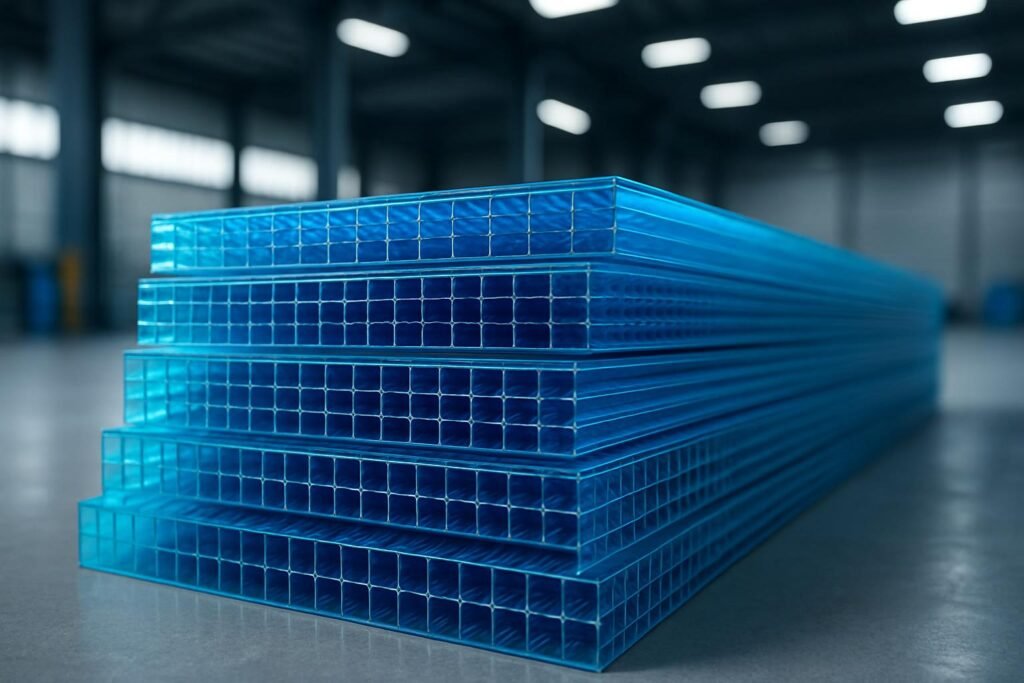
A clear twin wall polycarbonate sheet is a lightweight hollow panel formed with two outer skins connected by internal ribs. The enclosed air channels reduce panel weight and can provide better thermal performance than a solid sheet of comparable overall thickness. Twinwall sheets are commonly used for greenhouses, canopies, skylights and translucent wall glazing.
Lightweight panels for roofing and wall glazing
Twinwall plastic glazing panels combine two polycarbonate surfaces with parallel internal ribs. The channels should normally run in the direction required for drainage and condensation management.
This panel family is used for twinwall polycarbonate glazing where the project requires daylight, reduced sheet weight and a hollow structure. Buyers can compare twinwall with other polycarbonate sheet types before selecting a product.
- Two outer walls connected by internal ribs
- Clear, opal and selected colours by grade
- Custom lengths subject to production confirmation
- One-side or two-side UV protection by product
- Profiles, sealing tape and installation accessories
Why choose twinwall polycarbonate glazing?
The correct panel should be selected according to thickness, wall structure, light requirement, project climate, frame spacing and loads.
Lightweight construction
Twinwall panels use hollow internal channels to reduce material weight while maintaining a structured glazing panel.
Daylight glazing
Clear panels allow daylight into greenhouses, canopies, skylights and selected wall-glazing applications.
UV-protected options
UV protected polycarbonate sheeting can include a co-extruded outdoor layer. The protected surface must face exposure.
Impact performance
Impact resistant polycarbonate glazing can be reviewed for roofs and walls according to the panel structure, thickness, supports and required test method.
Thermal performance
Enclosed air channels can improve thermal performance compared with a single solid layer. Request current U-value data for the exact panel.
System accessories
Sheets should be coordinated with compatible joining profiles, edge profiles, sealing tape, washers and fasteners.
Information required for twinwall sheet selection
| Specification | Available review | Buyer must confirm |
|---|---|---|
| Panel structure | Twin-wall hollow polycarbonate | Exact rib geometry and wall structure |
| Thickness | Multiple twinwall thicknesses by product range | Required thickness and current availability |
| Width and length | Standard widths and custom length review | Finished dimensions and dimensional tolerance |
| Colour | Clear and selected colours by grade | Light requirement, sample and colour tolerance |
| UV protection | One-side or two-side options by product | Outdoor exposure direction and weathering data |
| Optical requirement | Clear, diffused or selected tinted appearance | Transmission, haze and diffusion target |
| Thermal data | Grade- and structure-specific data | Required U-value or insulation target |
| Structural design | Load or span data by panel system | Wind, snow, support spacing and frame design |
| Accessories | Profiles, tape, fasteners and washers | Complete roof or wall connection detail |
| Packing | Film, edge protection and pallet review | Quantity, labels and destination |
Where are clear twinwall panels used?
Greenhouse roofs and walls
Greenhouse polycarbonate sheets should be selected according to crop light, climate, insulation, condensation, ventilation and frame spacing.
Greenhouse replacement
A greenhouse polycarbonate panel replacement must match the existing thickness, width, channel direction, profiles and frame dimensions.
Canopies and patios
Lightweight canopy panels can provide daylight while reducing panel weight compared with solid glazing options.
Skylights
Hollow daylight panels for selected commercial, agricultural and architectural roof openings.
Wall glazing
Translucent or clear wall panels for workshops, agricultural buildings and selected commercial structures.
Covered walkways
Lightweight overhead glazing coordinated with support bars, connection profiles, flashing and drainage.

Replacing an existing greenhouse panel
Do not order a replacement using only the greenhouse dimensions. Measure the existing sheet and connection system before removing the old panel.
- Existing sheet thickness
- Panel width and finished length
- Twinwall channel and rib direction
- H-profile and U-profile dimensions
- Frame support spacing
- UV-protected exposure side
- Top and bottom edge-sealing method
- Required quantity and destination
Twin wall polycarbonate sheet fixings and accessories
Correct twin wall polycarbonate sheet fixings must allow thermal movement, maintain edge engagement and help manage rainwater, dust and condensation. Accessory selection should follow the exact sheet thickness and glazing system.
How to install twinwall polycarbonate panels
Confirm orientation
Identify the UV side, channel direction, roof slope and drainage path.
Prepare supports
Check frame spacing, alignment, support width and contact materials.
Cut and connect
Use suitable tools, clean the channels and allow thermal movement.
Seal and inspect
Complete tapes, profiles, flashing and drainage before removing film.
Twinwall vs solid vs corrugated polycarbonate
| Selection factor | Twinwall sheet | Solid sheet | Corrugated sheet |
|---|---|---|---|
| Structure | Two outer walls with internal ribs | Flat solid panel | Single profiled layer |
| Primary use | Greenhouses, skylights and lightweight glazing | Guards, barriers and clear windows | Roofing and profile-matched daylight panels |
| Transparency | Internal ribs remain visible | Clear view-through glazing | Profiled transparent or translucent appearance |
| Insulation | Air channels can improve thermal performance | Single solid layer | Generally a single profiled layer |
| Installation priority | Profiles, channel sealing and movement | Frame, holes, gaskets and edge support | Side laps, fasteners and profile fit |
Twinwall sheet quality checks
Panel structure
Confirm thickness, wall structure, rib spacing and channel geometry.
Dimensions
Inspect panel width, length and agreed dimensional tolerance.
Optical surface
Check colour, transparency, visible defects and protective film.
UV identification
Confirm the protected exposure side and film marking.
Channel cleanliness
Protect hollow channels from dust, water and cutting debris.
Profile fit
Trial-fit sheets with H profiles, U profiles and glazing bars.
Edge protection
Protect open channels and panel corners during storage and transport.
Export packing
Support sheets correctly and label thickness, colour and UV side.
Continue through the polycarbonate content cluster
Clear twin wall polycarbonate sheet FAQ
What is twinwall polycarbonate used for?
Twinwall polycarbonate is commonly used for greenhouses, canopies, skylights, wall glazing and covered walkways requiring lightweight daylight panels.
Is twinwall polycarbonate completely transparent?
Clear twinwall sheet transmits light, but its internal ribs remain visible. Use solid polycarbonate when clear view-through glazing is the main requirement.
Can twinwall sheets be cut to length?
Custom lengths and cutting can be reviewed. Provide the thickness, width, finished length, quantity and required tolerance.
Which way should twinwall channels run?
For roofs, channels normally run in the direction of the slope. For walls, they normally run vertically. Follow the approved installation design for the specific project.
Which side should face outdoors?
The marked UV-protected surface should face outdoor exposure. Check the printed protective film before installation.
How are twinwall sheet ends sealed?
Upper and lower channel ends may require different tape and profile details. Use the system-specific solid tape, breather tape and edge profile recommended for the installation.
Can twinwall sheets replace greenhouse glass?
They can be considered for greenhouse replacement projects, but the frame, panel thickness, width, profiles, light requirement, climate and local design requirements must be reviewed.
What information is required for a quotation?
Provide the panel structure, thickness, width, length, colour, UV requirement, quantity, application, accessories and destination.
Order Clear Twin Wall Polycarbonate Sheets
Send the required panel thickness, width, length, colour, UV protection, quantity, application and destination. Include existing profile or frame dimensions when ordering replacement greenhouse panels.